
By Judyvein Cheng, CPCN, BRNC
Certified pet nutritionist in Singapore
QUICK ANSWER
When oils are exposed to air, heat or light, they oxidise and go rancid. Rancid fats create free radicals, unstable molecules that damage cells and drive inflammation. The type of oil, how it's packaged and how you store it all make a big difference. Coconut oil is one of the most stable oils you can give your pet.
What happens when oil oxidises
When oil goes rancid, its fats start to break down and form new compounds, including free radicals. A free radical is a molecule that has lost an electron. To become stable again, it steals an electron from a nearby molecule, which then becomes unstable itself. This sets off a chain reaction that can damage cells, proteins and even DNA.
Over time, free radical damage is linked to chronic inflammation, degenerative disease and faster ageing.
Why some fats are more stable than others
Saturated fats (like coconut oil)
Their structure has no "weak spots", so they resist oxidation. Coconut oil handles heat, light and air far better than most oils.
Unsaturated fats (like fish oil and vegetable oils)
Their structure has double bonds, which react easily with oxygen. That makes them much more fragile.
This doesn't mean unsaturated fats are bad. Omega-3s from fish oil are important, and I give them to BeanBean every day. They simply need more care.
The problem with hydrogenated oils
To make vegetable oils more stable, manufacturers use high heat to force hydrogen into them. This is called hydrogenation, and it creates trans fats, which are harmful. Avoid anything labelled "partially hydrogenated", including coconut oil.
How to protect your pet from rancid oils
✓ Fish oil: choose glass bottles or capsules, buy sizes you'll finish quickly, keep it in the fridge once opened, and throw it out if it smells strongly fishy or "off".
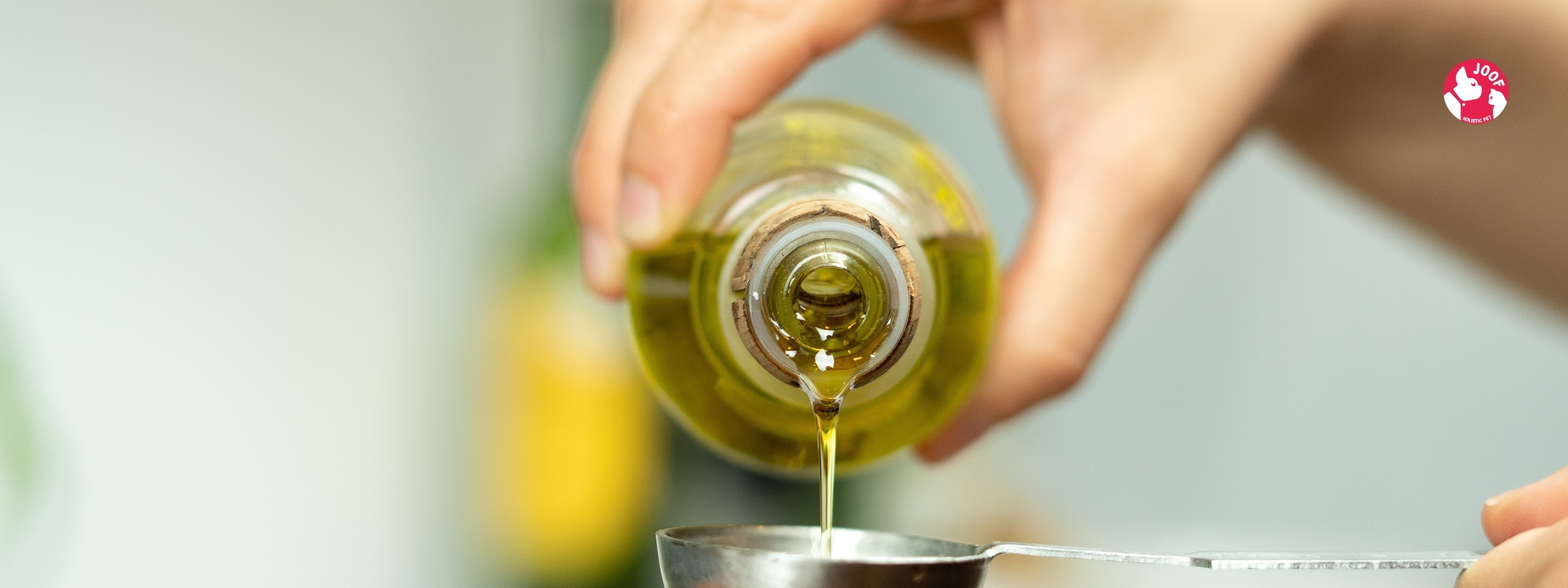
✓ Avoid oils in clear plastic bottles. Light speeds up oxidation, and plastic can leach into the oil.
✓ Keep oils away from the stove and out of the sun.
✓ Watch the fats in food too. Rancid fats can hide in treats and food that sit open for a long time. Store food sealed and somewhere cool.
MY TIP
When you add oil to your pet's food, especially fish oil, make it the last thing out of the fridge and the first thing back in. Every minute at room temperature exposes it to warmth, air and light.
Coconut oil is different. Because it doesn't go rancid quickly, you can leave it on the kitchen counter or in a cupboard, as long as it's away from the sun.
Oxidised fats are hard on the pancreas. If your pet has a sensitive pancreas, the quality of the fat matters as much as the amount. Read more in coconut oil and pancreatitis.
Antioxidants: the body's defence
Antioxidants stop the free radical chain reaction by giving up an electron without becoming unstable themselves. Vitamins A, C and E are strong antioxidants, and colourful foods like blueberries, spinach, kale and beets are naturally rich in them.
Virgin coconut oil is a natural antioxidant too, and it's very resistant to oxidation itself, so it helps protect without adding to the problem.
How to choose a stable coconut oil
A good therapeutic-grade virgin coconut oil has very low moisture (CocoTherapy's is 0.06% or less) and high lauric acid (at least 53%). Low moisture is what keeps it stable. It lasts around two years and doesn't need refrigerating. I recommend CocoTherapy Organic Virgin Coconut Oil.
Frequently asked questions
How do I know if an oil has gone rancid?
It smells sharp, sour, bitter or like paint. Fresh virgin coconut oil smells mildly sweet and coconutty.
Should I keep coconut oil in the fridge?
There's no need. A good-quality virgin coconut oil is stable at room temperature, even in Singapore. Just keep it out of the sun.
Is fish oil bad because it oxidises easily?
No. It's an important source of omega-3s. Choose a good-quality one and store it properly.
Shop this article
This article is for educational purposes and isn't a substitute for veterinary care. If you're concerned about your pet's health, please seek professional advice.
ABOUT THE AUTHOR
Judyvein Cheng, CPCN, BRNC
Judyvein is a Certified Professional Canine Nutritionist and Certified Raw Nutrition Coach for Cats & Dogs, and the founder of JOOF Holistic Pet. Her journey began with her Frenchie, Wangcai, and today she helps pet parents in Singapore take a root-cause approach to their pets' health.
RELATED READING