FREE DELIVERY for Orders $38 and Above.
About Us

Cart

Your cart is currently empty.

Continue shopping

About CocoTherapy

People say we know a thing or two about coconut oil. Coming from a coconut producing family, coconuts have been a big part of our family for three generations. When we were little girls, we remember watching our grandma make coconut oil in her small kitchen. She always used the freshest coconuts sourced and harvested from her family’s coconut farm. She took her time as she skillfully separated the coconut water and carved out the coconut meat. It was a tedious process but she didn't cut corners. To her, making the purest, tastiest, most nutritious oil was a labor of love.

Thanks to our grandma, we grew up with a knowledge and understanding of the potent healing power of coconut oil, and the meticulous attention to detail that goes into making therapeutic-grade coconut oil.

Through personal experience with our beloved Yorkie, Violet, we quickly learned that there were differences in coconut oil and how it can help animals with chronic allergies and other health issues. Unable to find a therapeutic-grade oil that matched the quality we'd grown up with, we founded CocoTherapy in 2009. Our vision from the beginning was to create the very best coconut oil and coconut-based products that are highly effective at treating chronic and acute health issues in pets.

Since the launch of CocoTherapy in 2009, we have made it our mission to teach others about therapeutic-grade coconut oil and have seen how it has helped countless animals around the world. In 2014, we worked with naturopathic doctor and lipid expert, Dr. Bruce Fife ND, to provide data and stories for his book, “Coconut Therapy for Pets”, which discusses amazing ways coconut oil has helped numerous animals.

About Our Coconuts and Coconut Oil

We realize that there are other brands of coconut oil available, but we also know that the quality of coconut oil varies greatly. The various grades of coconut oil are determined by the type and variety of the coconuts used, harvest and processing times, and the many different ways to produce and manufacture coconut oil. We only use coconuts harvested from our family farm, ensuring that the coconuts we use are 100% organic and non-GMO coconuts, grown in rich organic volcanic soil, and tree-ripened for 12 months. We can also assure you that our coconuts are ethically harvested by people and not monkeys.  Because our pets are important members of our family, we wanted to provide them with the very best coconut oil available, manufactured in the absolute highest standard in the industry in our family-owned facility. Learn more about Fake Coconut Oil and how CocoTherapy is different.

We promise you that CocoTherapy© organic virgin coconut oil and organic coconut chips are the best available coconut oil and treat available for you and your pets. Not only are they USDA Certified Organic, they are also Non-GMO Verified. CocoTherapy© is 100% natural and human-grade, and you can be confident that you are giving your pets the best coconut oil and coconut chips available. CocoTherapy© is the Number #1 brand recommended by integrative veterinarians in the USA.

The philosophy of our grandmother is the foundation of every CocoTherapy product we produce today.

Believe in Miracles,   

Health Benefits

CocoTherapy© Organic Virgin Coconut oil is a great-tasting, nutritious addition to your pet's diet. Virgin coconut oil contains approximately 96% saturated fat by weight. It supplies medium chain triglycerides, which help support your pet's over-all health, maintaining healthy body functions. Fed regularly to pets, coconut oil might have multiple benefits:

Skin Conditions

  • Supports and maintains healthy ski
  • Maintains normal, healthy levels of skin defense mechanisms
  • Supports healthy, shiny coats
  • Applied topically, soothes and supports the skin with cuts, wounds, hot spots, bites and stings

Gastrointestinal Health

  • Supports healthy gastrointestinal function
  • Supports healthy digestion
  • Supports healthy breath and oral health.

Healthy Immune System, Metabolic Function, and Bone Health.

  • Provides antioxidant support for healthy cell function
  • Supports healthy immune response to foreign microbes
  • Supports healthy thyroid function
  • Supports bone and joint health
  • Supports healthy weight
  • Provides quick, easily digested source of energy
  • Supports healthy brain and nervous system function

As always, before giving any new treat or supplement, talk to your holistic veterinarian about incorporating coconut oil and coconut chips in your pets' diet.

Personal Stories

Aside from taking virgin coconut oil ourselves, we have always given it to our pets on a regular basis. We have numerous personal experiences of how coconut oil has helped our allergic, hypothyroid, or overweight pets. Some of our stories:

  • Violet is our Yorkie who inspired us to start CocoTherapy. Born with allergies, we thought she was doomed to take Prednisone for the rest her life. Under the care of wonderful holistic vet, Dr. Karen Becker, we gave her our organic virgin coconut oil and were able to wean her off prednisone. For the remainder of her life, Violet never went on prednisone again and had a full, long beautiful coat. Learn more about Coconut Oil and Allergies.
  • One of our kitty cats, Amanda, a beautiful senior Ragdoll, loved licking coconut oil from our hands and chomping on coconut chips as a snack. Towards the end of her years, Amanda developed kidney disease and was hyperthyroid, and was under the care of a well-known kidney vet in Illinois and a holistic vet. Since beginning her conventional kidney care and taking coconut oil, her over-all kidney function increased from 18% to 20.8% --- much to the delight of her kidney vet, who said that this was not a typical occurrence for kidney function to actually increase. Until the end of Amanda's quality-filled life, coconut oil helped support her natural aging process. Learn more about Coconut Oil and Thyroid Health.
  • Our dog Maggie was diagnosed with "Borderline Hypothyroidism", by two separate vets, on two separate occasions. "Borderline Hypothyroidism", also called "Sub-Clinical" or "Low-Normal" Hypothyroidism, is a condition where the dog is definitely suffering from a weakened Thyroid system, but it is not yet severe enough to register out of the "Normal Range". In borderline cases, the conventional treatment is to provide the pet with a small thyroid supplement for 30 days just to see if it improves. However, there are risks in this approach. If thyroxine levels become too high, other body organs can be damaged. As we were not prepared to take this risk, and with the advice of a holistic vet, we added coconut oil to Maggie's diet, as coconut oil is known to help support healthy thyroid function. We then had Dr. Jean Dodds, the foremost authority on Canine Hypothyroidism at "Hemopet", run her thyroid tests. Maggie's result showed that she no longer had Borderline Hypothyroidism. Maggie lived a normal, healthy life to the end of her days. Learn more about Coconut Oil and Thyroid Health.
  • Our Chihuahua Lucy was 15 when she started exhibiting signs of canine cognitive dementia. She would stare at walls, and seemingly barked at nothing.  Aside from this, she also had luxating patella, and as she reached her senior years, was stiff with arthritis.  Coconut oil has been proven to alleviate signs of cognitive dementia in dogs, as ketones from coconut oil can cross the blood-brain barrier, and provide cellular energy to the brain, thus feeding the brain. When added to Lucy’s diet, it improved her awareness and she seemed more alert and more cognizant of her surroundings.  It also helped increase her mobility and ease her discomfort in her joints, as coconut oil is a powerful anti-inflammatory. By simply adding coconut oil to her diet, Lucy seemed to regain her youth back, allowing her to live out her senior years to the fullest. Learn more about Coconut Oil and Brain Health.
  • Our Yorkie, Camille developed Protein Losing Enteropathy and kidney disease at 13 years old. Her vet prescribed a diet with minimal fat and a sufficient amount of high-quality protein to help treat the disorder. We gave her our TriPlex MCT-3 Oil to combat weight loss and malnourishment, and provide the needed energy from fat. By supporting Camille’s GI and providing a fresh, all-natural, highly digestible diet, Charisa was able to manage Camille’s PLE with excellent results. She lived to 15 years with very minor complications from both PLE and kidney disease. Learn more about Coconut Oil and PLE and gastrointestinal disorders in pets.
  • Our kitty Ollie is a senior cat, 18 ½ years old.  When he was 15, he started vomiting daily and was losing weight.  He was diagnosed with idiopathic chronic pancreatitis.  Ollie was placed on a low-fat diet, as he could not tolerate fats.  Higher fat protein or even fish oil made him vomit. He also had an inflamed GI.  We added virgin coconut oil to Ollie’s diet to supply the much-needed cellular energy from fat, and to help him absorb fat-soluble vitamins and nutrients.  Since coconut oil does not stress the pancreas and has no need for pancreatic lipase and biliary acids to be metabolized by the body, it is highly tolerated by animals with pancreatitis and animals with lipid disorders. Today, Ollie’s pancreatitis and GI issues are under control, and is thriving with virgin coconut oil as part of his daily health protocol. In addition to this, Ollie’s pancreatitis has not progressed to triaditis (a syndrome concurrent to pancreatitis, IBD (inflammatory bowel disease) and cholangitis (inflammation of the bile duct system). We believe that coconut oil has help to prevent the onset of triaditis, as it is helps support a healthy immune system, has powerful antibacterial properties, and helps mitigate inflammation.

What is CocoTherapy?

CocoTherapy® believes in the total well-being of all living things. It is an all-natural, earth-conscious brand that centers on the common belief that coconuts are a healthy food that has nourished populations around the world for generations. The coconut tree is extremely valued as both a source of food and medicine among Asian and Pacific populations, that it is often called "The Tree of Life." CocoTherapy specifically celebrates the total well-being of our furry friends by making available the goodness of coconuts in all its products.
CocoTherapy Organic Virgin Coconut Oil

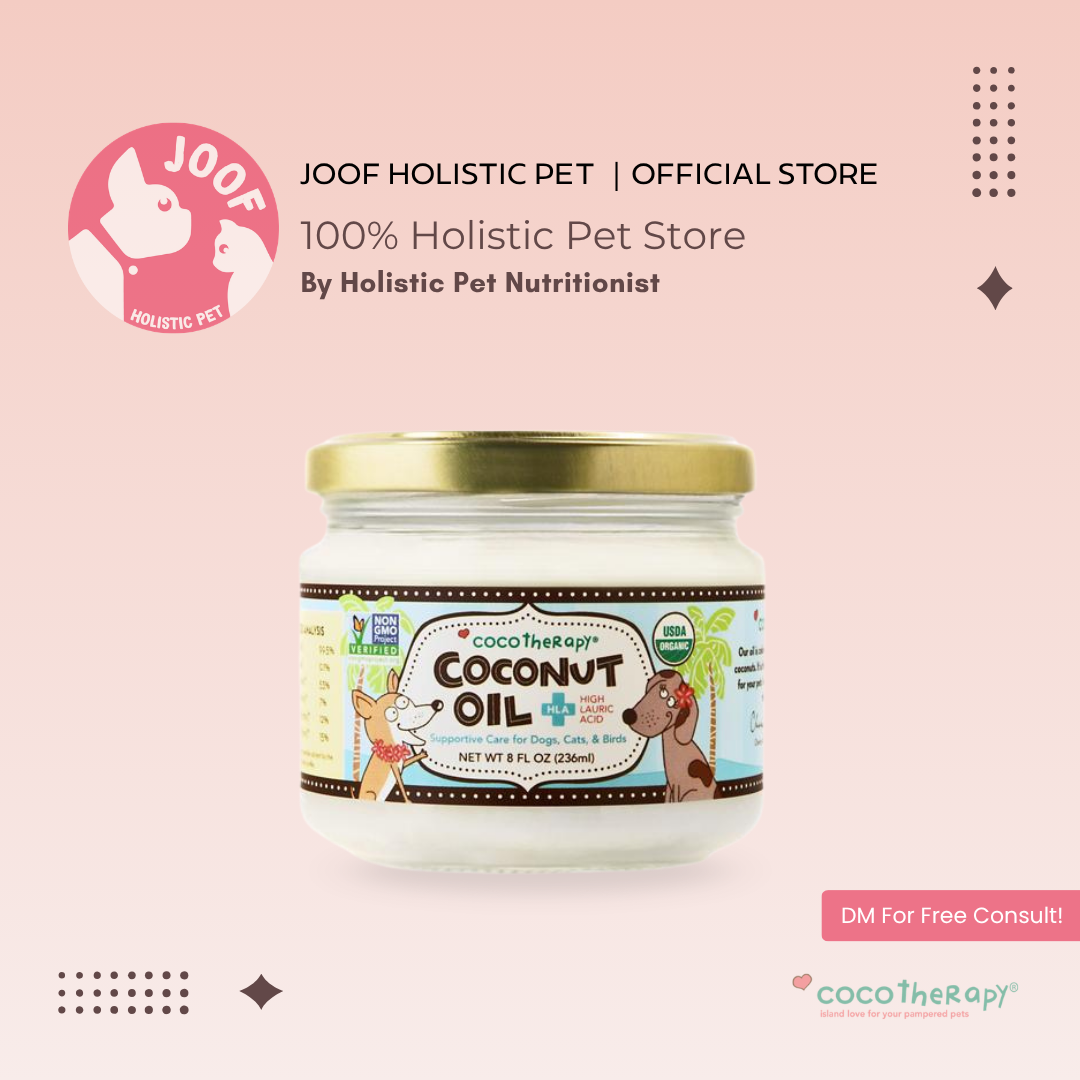
CocoTherapy coconut oil is 100% pure, USDA certified organic, virgin, cold-pressed coconut oil. Bottled from one of the best sources of coconut oil available in the world, it is the highest quality coconut oil can give your pets.

The Beneficial Oil

Virgin coconut oil is the richest natural source of Medium Chain Triglycerides (MCTs), which is a medium-chain fatty acid (MCFA). Most of coconut oil's health benefits come from medium-chain fatty acids. Medium-chain fatty acids consists of caprylic (C8:0), capric (C10:0) and lauric (C12:0) acids.

What is so Great About Medium-Chain Fatty Acids?

The most abundant medium-chain fatty acid (MCFA) found in coconut oil is lauric acid, which is considered responsible for many of coconut oil's health benefits. Coconut oil is about 50% lauric acid, and the only other abundant source found in nature is in human breast milk. The value of lauric acid has been widely studied and has shown multiple health benefits. When the body metabolizes lauric acid, it is converted by the body to monoglyceride monolaurin. Monoglyceride helps support a healthy body functions.

Dr. Mary Enig, a Ph.D. nutritionist/biochemist and one of the world's leading authorities on fats and oils, states, "Lauric acid in coconut oil is formed into monoglyceride monolaurin in the human or animal body. Monolaurin is the antiviral, antibacterial, and antiprotozoal monoglyceride used by the human or animal to destroy lipid coated viruses such as HIV, herpes, cytomegalovirus, influenza, various pathogenic bacteria including listeria monocytogenes and heliobacter pylori, and protozoa such as giardia lamblia. Some studies have also shown some antimicrobial effects of lauric acid."

Antioxidant and Vitamin E

The unsaturated oils in some cooked foods become rancid in just a few hours, even at refrigerator temperatures, and are responsible for the stale taste of left-over foods.

Coconut oil that has been kept at room temperature for over a year has been tested for rancidity, and showed no evidence of it. Because of this, coconut oil has been shown to have powerful anti-oxidative effects. It is well established that dietary coconut oil reduces our need for vitamin E, and may provide a significant source of antioxidants. As an antioxidant, it is 50 times more potent than Vitamin E, 15 times more potent than carrots, and 300 times more potent than tomatoes.

CocoTherapy - Organic Coconut Chips

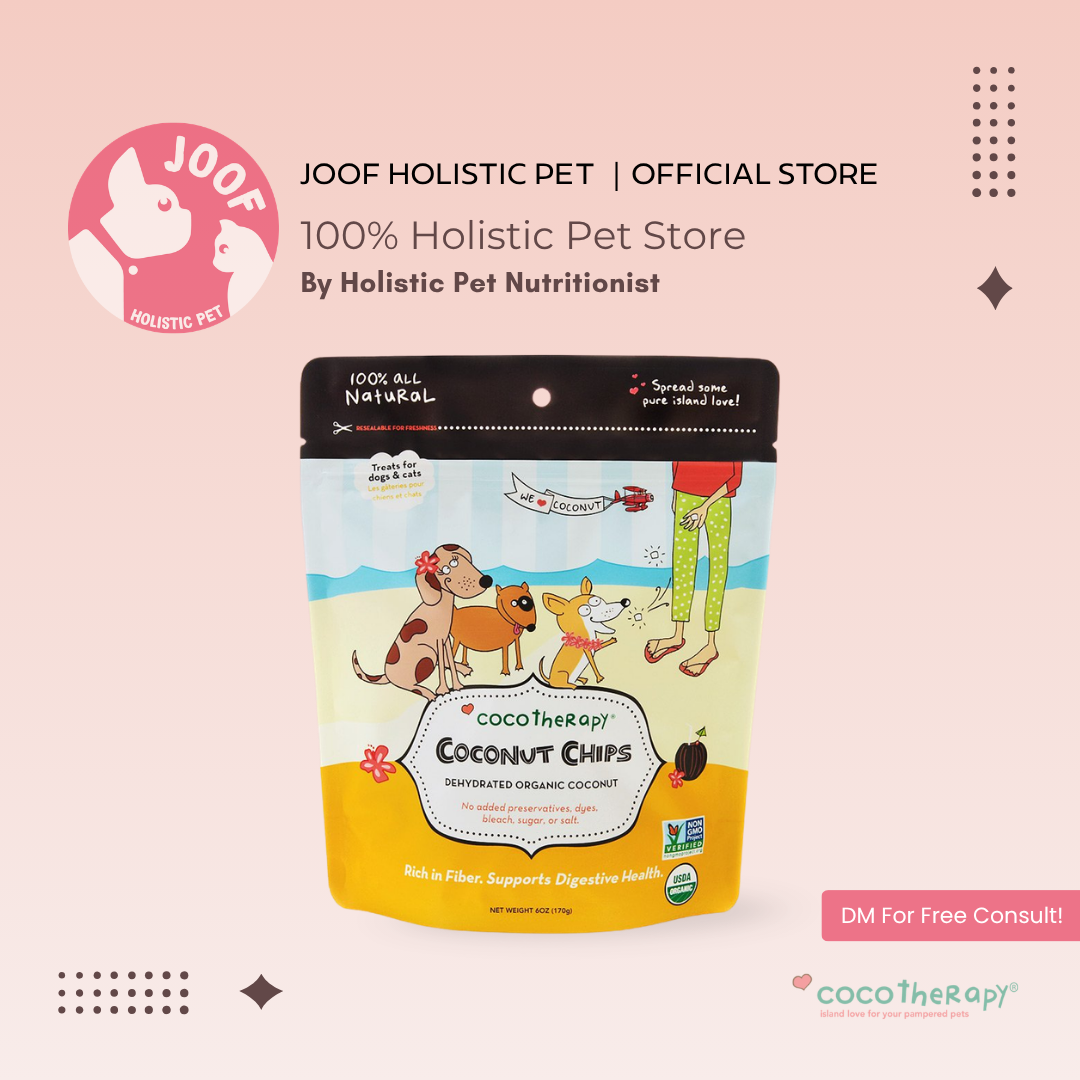
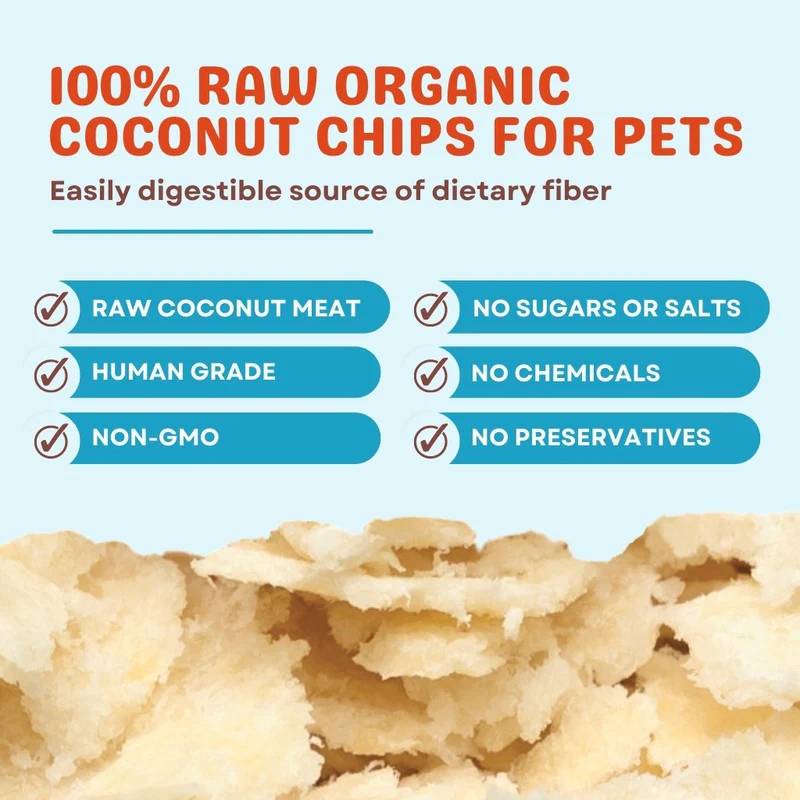
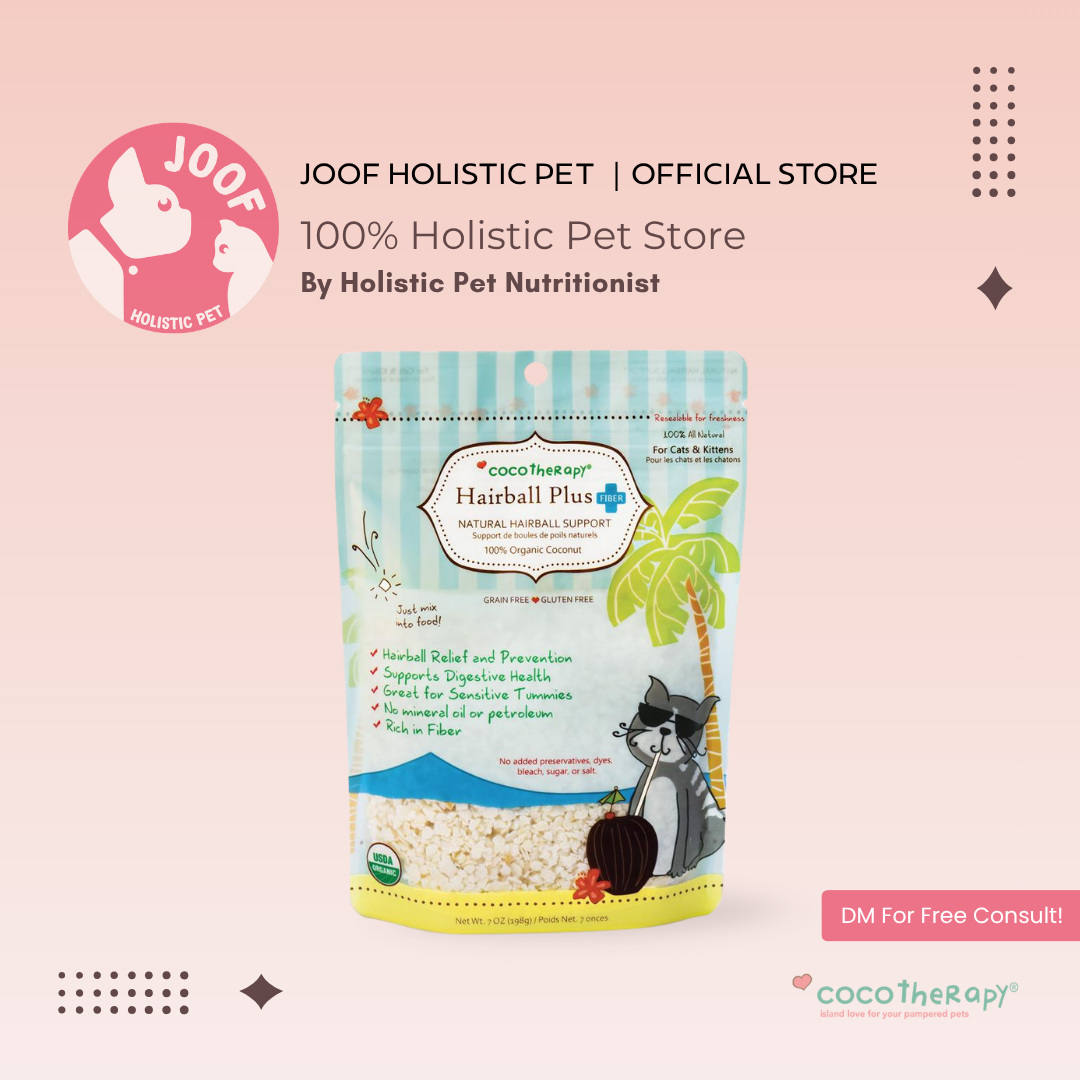
CocoTherapy also offers Coconut Chips, made of USDA organic dried coconut. Our dried coconut chips offer the same dietary benefits as coconut oil and is an excellent source of dietary fiber. All our pets are crazy about the fresh nutty taste of the coconut chips and it is a wonderful treat to give for variety.

CocoTherapy Coconut chips are the perfect, all natural alternative to all those yucky, over processed pet treats on the market that are made with artificial ingredients --- Plus they're totally delicious. We give our coconut chips to all our pets, including our birds and hamsters too!

CocoTherapy - USDA Organic Virgin Coconut Oil and Coconut Chips for your pet
CocoTherapy goes much further --- we use only USDA organic virgin coconut oil because we wanted to make sure we were offering our animals the very best and purest coconut oil we could find. Click here to read more about how CocoTherapy is different from other coconut oils available on the market.
Uncompromised Quality - Because Your Pet's Health Depends on It

CocoTherapy Organic Virgin Coconut Oil and Coconut Chips are 100% all natural, made of human-grade ingredients. They are made in an USDA organic inspected human food facility.

Coconut oil supports healthy body functions. Your pet is about to discover the wonderful benefits of coconut and embark in a healthier life.

There Is A Difference

CocoTherapy® believes in the total well-being of all living things. It is an all-natural, earth-conscious brand that centers on the common belief that coconuts are a healthy food that has nourished populations around the world for generations. The coconut tree is extremely valued as both a source of food and medicine among Asian and Pacific populations, that it is often called "The Tree of Life." CocoTherapy specifically celebrates the total well-being of our furry friends by making available the goodness of coconuts in all its products.

There are a number of factors that impact the quality of coconut oils, which results in the wide variety of quality and price available in the market today. The main factors that impact quality of coconut oil is the age, type and variety of the coconuts used, and the process used to make the oil.

Obviously the higher the quality of the coconut oil, the more effective it is. Selecting the highest quality oil will ensure that you and your pet will receive the maximum health benefits from coconut oil. There are two main factors to consider when looking for the high quality coconut oil:

  • Coconut oil should have the highest Lauric Acid content possible, using organic, non-GMO and non-hybrid coconuts.
  • Coconut oil should have the lowest possible moisture content. The method used to extract the coconut oil determines how low the moisture content is in the oil.

Read this PDF article to learn more about how we're different. CocoTherapy Difference.pdf

Quality Begins With The Coconuts

Coconut trees grow everywhere in the Philippines. This beautiful coconut tree is growing right outside the CocoTherapy office.

There are many brands of coconut oil out there, but do you know where they get their coconuts? At CocoTherapy, we do. Not only do we manufacture our own coconut oil and chips, we also grow and harvest our own coconuts in our own coconut plantation.

A majority of coconut oil manufacturers (other brands) do not own coconut farms. They purchase their coconuts from a number of small independent farmers, often buying from multiple farmers who may or may not be USDA organic inspected farms. These farmers may have their own cultivating practices and harvesting schedules, which affect the quality of the coconuts.

CocoTherapy coconuts come from one farm, which is also owned by our manufacturer. Why is this important?

  • The quality of our coconuts is consistent from batch to batch.
  • We know our coconuts are harvested at the optimum time (12 months old), no earlier, no later.
  • We know our coconuts are opened and used between four to eight hours after harvesting.
  • Our farm is guaranteed to be USDA organic inspected, and we never use hybrid or genetically modified (GMO) coconuts.

Quality starts with the coconuts. From the careful selection of the coconuts used, to the methods used in creating the final product, we know that CocoTherapy coconut oil is the purest, freshest, premium quality human-grade oil available.

So what does this mean? The Lauric Acid content in virgin coconut oil is highly dependent on the variety of the coconut and the way it was cultivated and harvested.

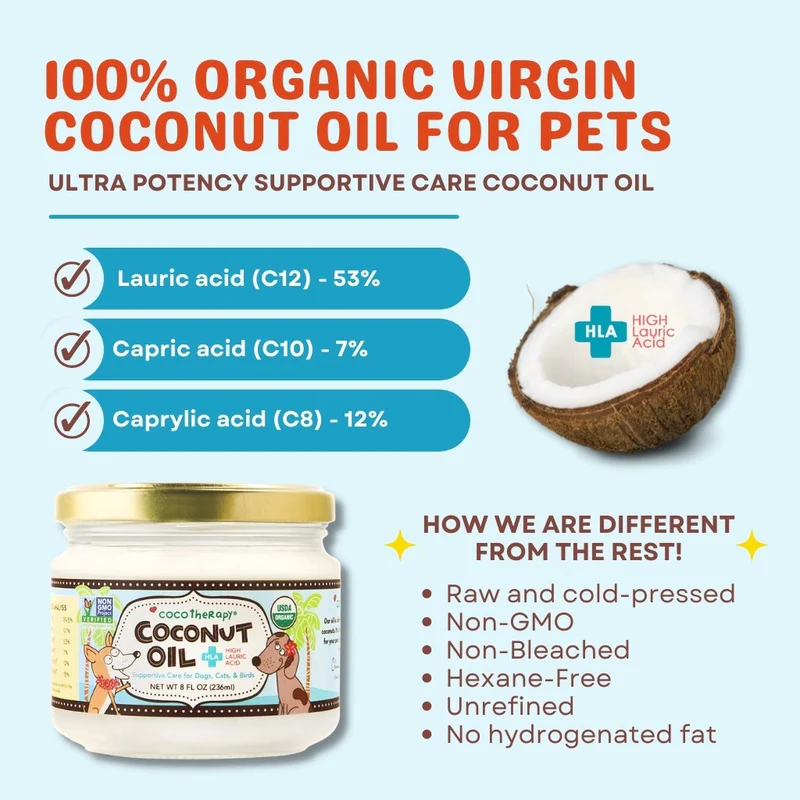
CocoTherapy© Coconut Oil has a minimum of 53.28% Lauric Acid content. Any other brand that claims to have a Lauric Acid content higher than 55% is either exaggerating, or using hybrid or genetically-modified (GMO) coconuts.

In addition to this CocoTherapy Coconut Oil has a high percentage of beneficial Medium Chain Fatty Acids (lauric acid, caprylic acid, and capric acid), containing at least 64%.

There are many brands of coconut oil out there, but do you know where they get their coconuts? At CocoTherapy, we do. Not only do we manufacture our own coconut oil and chips, we also grow and harvest our own coconuts in our own coconut plantation.

A majority of coconut oil manufacturers (other brands) do not own coconut farms. They purchase their coconuts from a number of small independent farmers, often buying from multiple farmers who may or may not be USDA organic inspected farms. These farmers may have their own cultivating practices and harvesting schedules, which affect the quality of the coconuts.

CocoTherapy coconuts come from one farm, which is also owned by our manufacturer. Why is this important?

  • The quality of our coconuts is consistent from batch to batch.
  • We know our coconuts are harvested at the optimum time (12 months old), no earlier, no later.
  • We know our coconuts are opened and used between four to eight hours after harvesting.
  • Our farm is guaranteed to be USDA organic inspected, and we never use hybrid or genetically modified (GMO) coconuts.

Quality starts with the coconuts. From the careful selection of the coconuts used, to the methods used in creating the final product, we know that CocoTherapy coconut oil is the purest, freshest, premium quality human-grade oil available.

So what does this mean? The Lauric Acid content in virgin coconut oil is highly dependent on the variety of the coconut and the way it was cultivated and harvested.

CocoTherapy© Coconut Oil has a minimum of 53.28% Lauric Acid content. Any other brand that claims to have a Lauric Acid content higher than 55% is either exaggerating, or using hybrid or genetically-modified (GMO) coconuts.

In addition to this CocoTherapy Coconut Oil has a high percentage of beneficial Medium Chain Fatty Acids (lauric acid, caprylic acid, and capric acid), containing at least 64%.

Not All Coconut Oil is Created Equal

CocoTherapy organic coconut oil is superior to other coconut oils in the market.

Philippine Government Standards state that the moisture content of coconut oil cannot exceed 0.2% max.  Usually, coconut oil that is considered "excellent" has a moisture content between 0.04% - 0.11%. Higher moisture content not only lessens the oil's shelf life, but also makes the oils more susceptible to oxidation, bacteria, and the breakdown of triglycerides into free fatty acid and glycerol. Since a lower moisture content results in a more stable oil, it is also more able to withstand heat-induced damage when used in cooking, either for yourself of when home-cooking your pet's food. CocoTherapy Coconut Oil has a moisture content that ranges between 0.02% -  0.06%.

In addition to this, other coconut oil brands typically contain Lauric Acid levels of less than 40%. The Lauric Acid content in virgin coconut oil is highly dependent on the variety of the coconut and not on the process used for producing it. CocoTherapy Coconut Oil has a 53.28% Lauric Acid content. Any other brand that claims to have a Lauric Acid content higher than 54% is either exaggerating, or using hybrid or genetically-modified (GMO) coconuts. In addition to this CocoTherapy Coconut Oil has a high percentage of beneficial Medium Chain Fatty Acids (lauric acid, caprylic acid, and capric acid), containing at least 64%.

We know that there are other coconut oils available in the market. But since there are many different varieties of coconuts and different ways to produce coconut oil, we put a lot of time and effort to make sure that we were getting the best oil possible, manufactured in the absolute highest standard in the industry. CocoTherapy is human-grade and can be shared and used by the whole family, both human and animal alike.

CocoTherapy Coconut Oil is human-grade, 100% pure and natural:

  • non-GMO (genetically modified organism)
  • no hybrid coconuts
  • cold pressed
  • hexane-free
  • unrefined
  • non-bleached
  • raw
  • NO trans fat
  • No hydrogenated fat

Most commercial grade coconut oils are made from copra. Copra is coconut meat that has been dried by smoke-drying, sun-drying, or kiln-drying, or a combination of any of these three methods. If coconut oil is extracted from copra, the unrefined oil is not suitable for consumption and must be purified, or refined. Coconut oil extracted from copra is considered RBD coconut oil, which means it has been Refined, Bleached, and Deodorized.

Impurities from RBD coconut oil must be removed by filtering the oil through bleaching clays, and high heat is needed to deodorize the oil. Sodium hydroxide is typically used to remove free fatty acids and prolong shelf life. Extracting coconut oil from copra is the most common way to mass-produce coconut oil because it produces more oil. However, this is not the purest way to manufacture virgin coconut oil. Coconut Oil extracted from copra usually has a bland, oily taste.

Not All Coconut Oil is Created Equal

How CocoTherapy Coconut Chips are Different from Other Dehyrdated Coconut Chips
Dehydrated coconut meat is rich in nutrients and fiber; however it can be difficult to digest for most animals.

We produce our CocoTherapy Coconut Chips in a special way to be highly digestible and easily assimilated in the body, while providing all the beneficial nutrients from medium-chain fatty acids (MCFA).

Unlike other dehydrated coconut chips or flakes available in your grocery aisles or even health food stores, CocoTherapy coconut chips break down easily and quickly with just water.

The Proof Is In The Chips

The digestive system of some animals can not tolerate the typical raw dehydrated coconut chips found in grocery stores. Feeding your pets typical dehydrated coconut chips may stress their digestive system and often times the undigested coconut chips are passed either in the animal's stool or vomit. However, our CocoTherapy Coconut Chips were uniquely developed to be easily digestible for animals.

To see how quickly CocoTherapy coconut chips break down, we took a leading dehydrated organic coconut chips brand (purchased from a popular health food store) and CocoTherapy Coconut Chips and placed them in a saucer of water.

CocoTherapy Coconut Chips vs other chips
Here, you can see typical dehydrated organic coconut chips (left) and CocoTherapy Coconut Chips (right), placed in a saucer full of water.
In just 30 seconds, the CocoTherapy Coconut Chips (right) already began to break down.
In just under a minute, the CocoTherapy Coconut Chips (right) have broken down in the water; while the other organic coconut chips (left) have no changes at all.

In just three minutes, the CocoTherapy Coconut Chips (right) have completely absorbed the water and have a smooth, soft texture. The other organic coconut chips (left) have not broken down and there is still water in the saucer.

CocoTherapy Coconut Chips provides highly digestible fiber to support and maintain gastrointestinal health, while providing all the nutritional benefits of coconut oil. It is easily digested by dogs, cats, and other small mammals.

Our Coconut Oil Production

Our premium grade coconut oil is manufactured in the highest standards, combining generations-old traditional methods with state-of-the-art processes. Our organic coconut oil comes from coconuts that are grown without the use of any chemical fertilizers and pesticides, harvested fresh from USDA Organic coconut plantations. Our coconuts come from the traditional coconut palm tree, and unlike some other brands, we never use hybrid or genetically modified (GMO) varieties of coconuts. In fact, our entire process of manufacturing does not involve the use of any chemicals whatsoever. Our processing plant is also inspected and uses only stainless steel food grade equipment. CocoTherapy© is certified organic every year by Global Organic Alliance, Inc, a USDA Accredited Certifying Agent, and bears the USDA Organic seal on its labels.

The coconuts are harvested fresh and are opened between four to eight hours of harvesting. The fresh coconut meat is immediately stored in a cold dry environment, and cold-pressed to express the healthy and pure coconut milk. The coconut milk is stored in a cold dry environment for several hours, until the oil naturally separates from the liquid. The oil is then separated and filtered from the liquid and moisture is removed in a process called vacuum drying, with low processing temperatures that are approximately 100 degrees F. No chemicals or high temperatures are ever used. Mild, low temperature heat is necessary to insure that the film of water on the surface of the oil is completely removed. Water or excess moisture will cause the oil to get rancid. It is possible to produce virgin coconut oil without any heat whatsoever, however, it will contain a higher moisture content, which is not desirable in coconut oil. If purchasing a brand that does not use any heat during processing, the oil will be more susceptible to oxidation, bacteria, and the triglycerides will break down into free fatty acid and glycerol.

CocoTherapy Coconut Oil is bottled in glass jars, never plastic. The chemicals which comprise PVC, have been known to leach into water and food products. There is concern with the plastic chemicals leaching into the oil. Oils can swell polyethylene, and therefore some of this substance may leach into the oil. It is always safest to store coconut oil in glass jars. In addition to this, you will always be able to see our oil - pure white in color when solid, or crystal clear when melted.

The purest, virgin coconut oil should be water clear when completely melted, or pure white in color when solid. It contains natural Vitamin E and has a mild fresh coconut aroma. The intensity of the scent depends on the process used for producing the oil. It should taste fresh, light, and not "greasy". Any coconut oil that is considered "odorless" has been refined, bleached, or deodorized. It will be odorless and tasteless. It will be slightly yellow or "off-white" in color and will not contain natural Vitamin E as it would have been removed during processing. Other causes of the "yellowish" or off-white color in some coconut oils are bacterial contamination of the coconut meat before oil extraction, or high-heat temperature used during processing. High temperatures used in processing will remove the natural Vitamin E or tocopherol content in the coconut oil.

CocoTherapy Coconut Oil is guaranteed to be one of the highest quality coconut oil available on the market today. From the careful selection of the coconuts used, to the methods used in creating the final product, it is the purest, freshest, premium quality human-grade oil available. It is raw, cold-pressed, hexane-free, unrefined, non-bleached, and contains no trans fat or hydrogenated fat.

Our Coconut Chips Production

Like our coconut oil, our coconut chips are processed to ensure that they have a lower moisture content and higher Lauric acid content than any of the dehydrated coconut flakes available in health food stores.

CocoTherapy© Coconut Chips are made from USDA-certified organic coconuts and dehydrated in low temperatures. The organic coconut meat is removed from the shells and washed in pure, filtered un-chlorinated water. To ensure that the nutrients are kept intact, the shredded coconut is slowly dehydrated at temperatures no higher than 98.6° F (37° C), creating great tasting coconut chips that is considered "raw". Dehydrating slowly at low temperatures ensures that our shredded, raw coconut tastes fresh, has a wonderful texture, and contains all the rich nutrients found in fresh coconuts.

Other dried or desiccated coconut flakes available online and in health food stores may use conventional, less-expensive methods of producing dried coconuts flakes, which typically includes extracting some of the coconut milk moisture from the coconut meat and drying it in large ovens at higher temperatures between 170°-180° F (76°-82° C). We do not recommend giving your pets dried coconut flakes from grocery stores if you are not sure of the product's manufacturing methods.

And because our coconut chips are raw, it is vacuum-sealed immediately after processing to maintain freshness and reduce oxidation and the breakdown of triglycerides. It is then repacked in a re-sealable foil pouch to further reduce environmental damage. Our air-tight, double-packaged process helps to ensure that all the nutrients are preserved. There is no other brand available that is processed and double-packaged in this way.

We take the time to produce and package our coconut chips by following the highest quality standards set in the industry, because we want to make sure that our coconut chips contain the most flavor and nutritional value possible for our pets and ourselves.

Our process enables vitamins, minerals, amino acids, and nutritional benefits to be preserved, resulting in a raw coconut meat and oil that tastes fresh, has wonderful texture and smell, and contains all the health benefits of fresh raw coconuts. We encourage you to compare CocoTherapy Coconut Oil and Coconut Chips to other brands. You can see, smell and taste the difference!

Certified USDA Organic
CocoTherapy© products are certified organic by the Global Organic Alliance, Inc, a USDA accredited certifying agent. Look for the USDA Organic seal on our package. 

Our coconuts are ethically sourced and harvested by humans. Unlike some farms in Asia, no monkeys are used in the harvesting of our coconuts.

Common Coconut Oil Myths

There have been many misleading information and erroneous claims about coconut oil. The following lists some of these claims and the truth about them.
FALSE CLAIMS
TRUTHS
Coconut oil is high in cholesterol
Coconut oil has no cholesterol.
Coconut oil is like animal fats-- saturated.
Both fats are saturated fats, but their composition is very different. Animal fats are comprised of long chain fatty acids (LCFA), meaning it is made up of 14-24 carbon atoms. Coconut oil contain medium chain fatty acids (MCFA), which range from 8-12 carbon atoms.

The length of the carbon chain in fats is a key factor in and seldom end up as body fat or as deposits in arteries. They produce energy, not fat. Medium chain fatty acids do not have a negative effect on blood cholesterol and help protect against heart disease.
Coconut oil increases cholesterol levels and causes heart disease.
Coconut oil has no cholesterol. The medium chain fatty acids (MCFA) in coconut oil are broken down and used for energy production and seldom end up as body fat or as deposits in arteries. They produce energy, not fat. Medium chain fatty acids do not have a negative effect on blood cholesterol and help protect against heart disease.

People from countries who take large amounts of coconut oil (such as Polynesian Islands, Sri Lanka, India, and the Philippines) have shown to have low cholesterol and rarely develop heart diseases.
Polyunsaturated oils are the safest and the best.
Not true. Polyunsaturated oils are the sources of inflammatory prostaglandins, allergic leukotrienes, blood clot inducing thromboxane, and when partially hydrogenated, are converted to transfatty acids that are even more atherogenic (the ability to promote the development of atherosclerosis, the formation of a thick, plaque-induced containing cholesterol and other lipids, especially on the innermost layer of arterial walls.).

Polyunsaturated fats (vegetable oils, such as corn, soy, safflower, and sunflower oils) are made up of double-carbon bonds, which are highly vulnerable to oxidation and free-radical formation. Polyunsaturated oils become toxic when they are oxidized as a result of exposure to oxygen, heat, or light, causing rancidity or formation of free radicals. Unfortunately, cooking accelerates the oxidizing process making the oil even more rancid and unhealthy. Because of this, It is best to keep vegetable oils in sealed, airtight, opaque containers and stored in the refrigerator to slow down rancidity.

Unlike unsaturated fats, the saturated fats in coconut oil do not have any missing hydrogen atoms or double-bonded carbons. This means coconut oil is not vulnerable to oxidation and free-radical formation. Coconut oil that has been kept at room temperature for over a year has been tested for rancidity, and showed no evidence of it.
Did You Know?

Historically, coconut oil is one of the earliest oils to be used as a food and as a pharmaceutical. Ayurvedic literature has long promoted the health benefits of coconut oil.

Medium chain fatty acids are added to most, if not all baby formulas. Wysong Mother's Milk© (Wysong Pet Supplements Nutrition Enhancement Mother's Milk for Cats & Dogs), which is formulated to mimic cat and dog milk contains coconut oil as a source of MCTs.

Coconut oil that has been kept at room temperature for over a year has been tested for rancidity, and showed no evidence of it. It is well established that dietary coconut oil reduces our need for vitamin E, and provides a significant source of antioxidants. As an antioxidant, it is 50 times more potent than Vitamin E, 15 times more potent than carrots, and 300 times more potent than tomatoes.

Coconut oil is essentially a nontoxic food. It is considered safer than soy, which many people eat by the pound. The FDA has included coconut oil on its list of foods that are "generally regarded as safe" (GRAS list). This is an exclusive list. Only those foods that have passed stringent testing and have a history of safe usage can qualify for inclusion on the GRAS list.

Something Else That You Should Know
CocoTherapy Coconut Oil for dogs and cats is 100% pure, USDA certified organic, virgin cold-pressed coconut oil!
Veterinarians Who Use CocoTherapy

Below are veterinarians and practitioners who use and recommend CocoTherapy:

  • Dr. Trisha Ballard, DVM Alternative Veterinary Hospital - Lewisville, TX
  • Dr. Karen Becker DrKarenBecker.com, Mercola Healthy Pets
  • Dr. Ann Bell A Natural Way Chiropractic & Wellness Ctr - Hartford, WI
  • Dr. Michael Berkenblit Village Animal Clinic - North Palm Beach, FL
  • Dr. Larry Bernstein Natural Holistic Health Care - North Miami Beach, FL
  • Dr. Denise Bevins, DVM, CVA Holistic Veterinary Care - Fort Wright, KY
  • Dr. Wendy Biggs Dr. Wendy Biggs - Archer, FL
  • Dr. Anji Bodana Cobb Pet Clinic - Marietta, GA
  • Dr. Crystal Bohanon Gresham Veterinary Hospital - Flint, TX
  • Dr. Elana Braz VCA Animal Healing Center -Yardley, PA
  • Dr. Paula Jo (PJ) Broadfoot Broadfoot Veterinary Clinic - Van Buren, AR
  • Dr. Gerald Buchoff, DVM Holistic Pet Care Veterinary Hospital - Little Falls, NJ
  • Dr. Kelly Burgess St. Albert Animal Clinic - St. Albert, AB Canada
  • Dr. Kristie Buys Veterinary Holistic Care - Bethesda, MD
  • Dr. Nancy Churchill Gwinnett Animal Hospital - Snellville, GA
  • Dr. Carmen Colitz All Animal Eye Care - Jupiter, FL
  • Dr. Toni Connell, DVM Independent Hill Veterinary Clinic - Manassas, VA
  • Dr. Katherine DeVore Dr. Katherine J DeVore - High Point, NC
  • Dr. Rose Dileva, VMD, MS, CVCP, CVA Animal Wellness Center - Wilmington, DE
  • Dr. Meagan Duffy Five Elements Veterinary Care - Silver Spring, MD
  • Dr. Allison Dunlop Integrative Veterinary Service - Brookfield, WI
  • Dr. Victoria Farthing Animal Wellness Center at Concord Farm - Stafford, VA
  • Dr. Pamela Fisher, DVM Holistic Vet Practice & Natural Pet Store - Canton, OH
  • Dr. Twila Floyd Nature's Oasis Animal Hospital - Auburn, AL
  • Dr. Karen Fredenhagen Kingsley Animal Hospital - Orange Park, FL
  • Dr. Thomas A. Fredenhagen Kingsley Animal Hospital - Orange Park, FL
  • Dr. Jennifer Fugit My Pets Animal Hospital - Lakeland, FL
  • Dr. Margie Garrett ARK Veterinary Service - Evansville, IN
  • Dr. Erika Gebhard NorCal Veterinary Emergency & Specialty H - San Francisco, CA
  • Dr. Thomas Granger, DVM Countryside Veterinary Clinic - Beaumont, TX
  • Dr. Vivian Grant Autumn Green Animal Hospital - Geneva, IL
  • Dr. Erin Holder FloridaWild Veterinary Hospital - Deland, FL
  • Dr. Jean Hollenstein Glacial Ridge Vet Clinic - Glenwood, MN
  • Dr. Sherry Hope CHAI (Chattanooga Holistic Animal Institute - Chattanooga, TN
  • Dr. Mark Ingram Franklin Road Animal Hospital - Brentwood, TN
  • Dr. Eniko Irinyi Southpoint Animal Hospital - Sanford, NC
  • Dr. Bretaigne Jones Home Service Veterinarian - Roanoke, VA
  • Carol Jurca, PTA, CCRP Canine Physical Rehab - Montgomery, IL
  • Dr. Miwa Kanbe Muirlands Animal & Avian Hospital - Mission Viejo, CA
  • Dr. Lindsay Keller Compassionate Care Vet Clinic - Waverly, IA
  • Dr. Peggy LaCombe At Your Bark and Call - Phoenix, AZ
  • Dr. Sally Lane Vet Wellness - Newbury Park, CA
  • Julie Anne Lee, DCH, RcsHOM The Adored Beast Veterinary Clinic, Vancouver Animal Wellness Hospital, Healing Place Veterinary Clinic, Holistic Wing, Animal Care Clinic - Canada
  • Dr. Michelle Lennox Reidsville Veterinary Hospital - Reidsville, NC
  • Dr. Natalie Lenoir Well Being Medicine - Birmingham, AL
  • Dr. Melissa Magnuson Canobie Lake Veterinary Hospital - Windham, NH
  • Dr. Monique Maniet Arnica LLC - Woodville, VA
  • Dr. Rosemary Manziano Colts Neck Animal Clinic - Colts Neck, NJ
  • Dr. Patti Maslanka Home Care Vet - Rocky Hill, NJ
  • Dr. Judy Morgan Clayton Veterinary Associates - Clayton, NJ
  • Dr. Carole Nicholson Home Veterinary Care of Stafford - Stafford, VA
  • Dr. Neely North, DVM, CV Nashville Holistic Veterinary Care - Nashville, TN
  • Dr. Natalie Olden-Stahl Pet Pals Holistic Veterinary Hospital - Indianapolis, IN
  • Dr. Deanna O'Neil, DVM Deanna O'Neil, DVM - Palos Verdes Estates, CA
  • Dr. Cheryl Peterein Animal House Veterinary Hospital - Grapevine, TX
  • Dr. Billie Pierce Sunvet Animal Wellness Clinic - Asheville, NC
  • Dr. Elise Radebaugh Healing Paws Wellness Center - Eugene, OR
  • Dr. Debbie Reynolds Veterinary Home Healthcare - Martin, TN
  • Dr. Tiffany Rimar Veterinary Healing Arts - St. Petersburg Beach, FL
  • Dr. Nicolle Rubendall Coastal Mobile Natural Animal Healing -Wilmington, NC
  • Dr. Lee Simpson Healing Options for Animals - Kempton, PA
  • Dr. Marc Smith Natchez Trace Veterinary Services - Nashville & Franklin, TN
  • Dr. Odette Suter The Whole Pet - Bartlett, IL | Peak Animal Health Center - Island Lake, IL
  • Dr. Amy Thompson Canton Animal Clinic - Canton, NY
  • Dr. Bob Ulbrich Holistic Pet Vet Clinic - Tigard, OR
  • Dr. Jennifer Urban Valley Creek Road Animal Hospital - Woodbury, MN
  • Dr. Kelly Vernon Buffalo Ridge Animal Hospital - Ocala, FL
  • Dr. Margareta Vukas M PET HOLISTIC - Toronto, ON Canada
  • Dr. Lanny Walker Paws and Purrs Animal Clinic - Chesnee, SC
  • Dr. Michael Walker, DVM Forest Animal Hospital - Forest, MS
  • Dr. Julie Wickel Claws & Paws Veterinary Hospital - Manuel, TX
  • Dr. Janie Wilson, DVM On a Roll House Calls - Lawrenceburg, IN
  • Dr. Madeline Yamate Center For Integrative Animal Medicine - Davis, CA

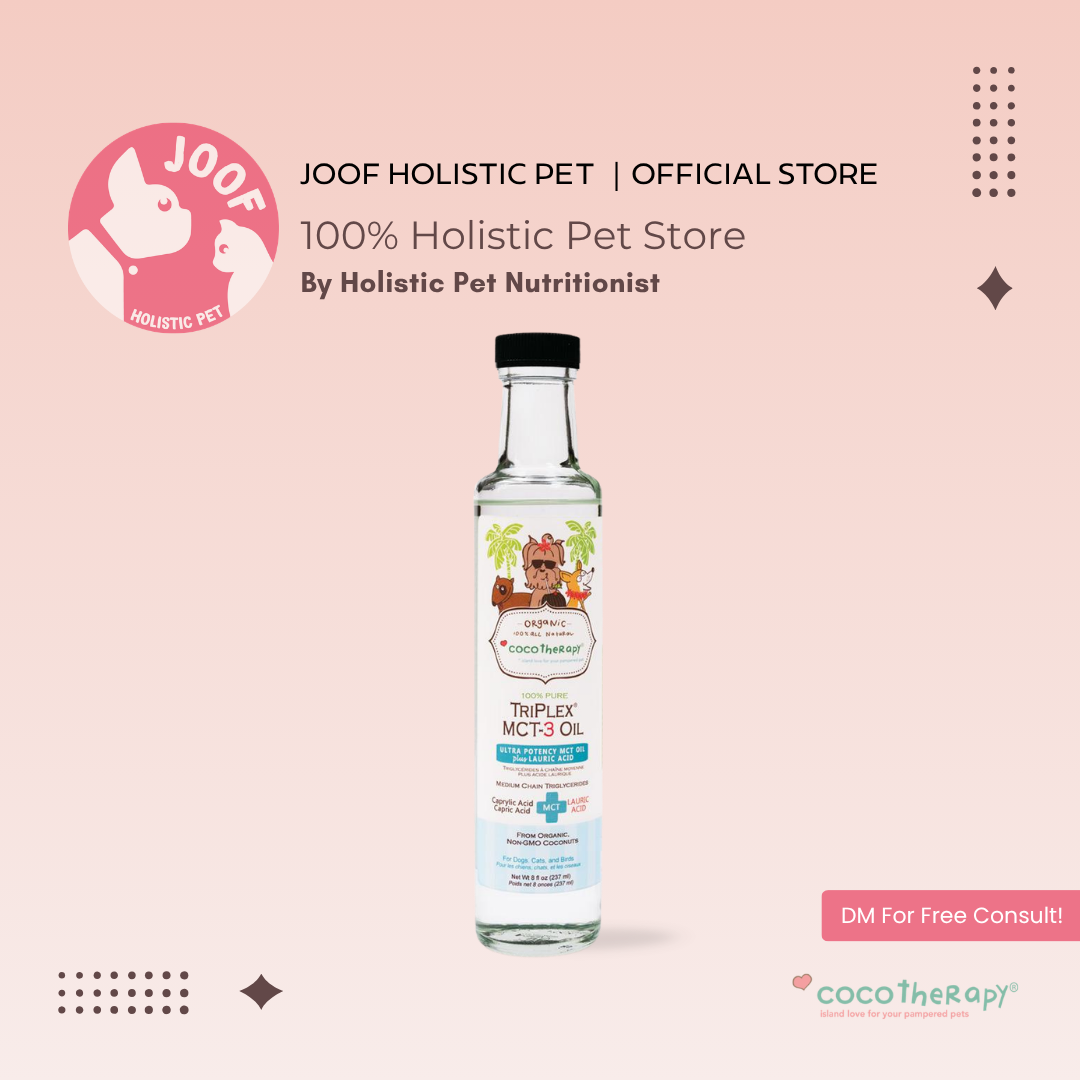
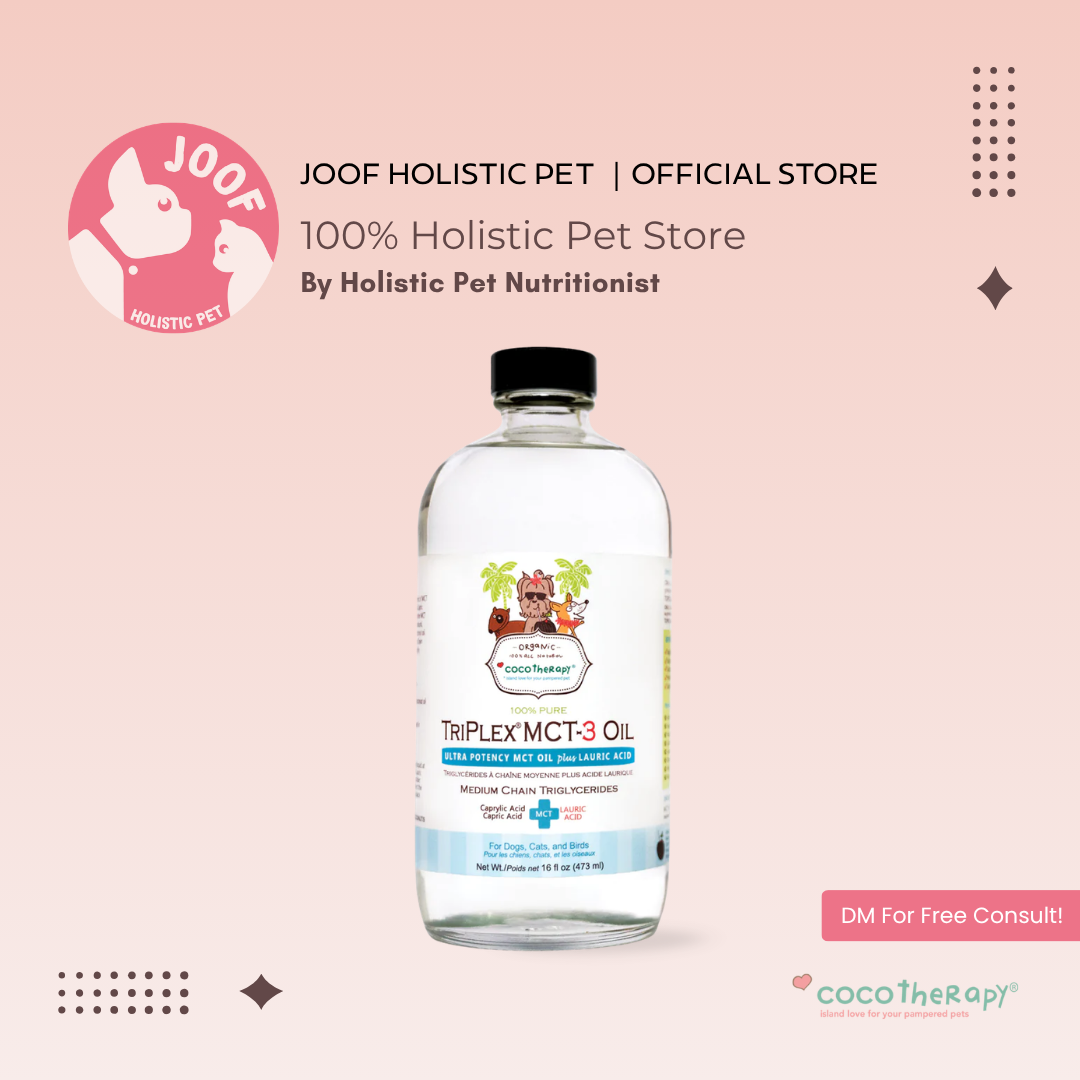
CocoTherapy TriPlex MCT-3 Oil FAQ

What are the unique properties of our MCT-3 Oil?

Its unique characteristics include:

  • 93% MCFA composition that includes Lauric Acid
  • Remains liquid even at 45ᵒ F, increasing its potential applications
  • Retains all the known benefits of Virgin Coconut Oil
  • 100% pure and all natural containing NO trans-fatty acids or cholesterol

Is the Lauric acid added to your MCT-3 Oil, or is there special processing that maintains the Lauric acid levels it has?

In our MCT-3 oil, we do not add Lauric acid to the oil. When we go through the process of fractionation, where we remove all the long chain fatty acids, as well as some of Lauric Acid - but we keep some Lauric Acid in it.

Is MCT oil considered fractionated coconut oil?

Yes, MCT oils are fractionated coconut oil (or a blend of palm kernel oil). MCT oil is fractionated oil, but not all fractionated oil is MCT oil. Like Virgin Coconut Oil, there are lots of different ways to make MCT oils, and they all contain various levels of MCFAs. CocoTherapy MCT-3 Oil is derived only from our organic coconut oil.

What is fractionation?

Fractionation is a method of distilling oil to separate different types of fats that are naturally found in oils. Fractionated coconut oil is produced through fractionation. This involves extracting and isolating the MCTs from coconut or palm kernel oil.

Fractionation is possible due to the different melting points of various fatty acids. For example, Lauric acid and long chain fatty acids have higher melting points than caprylic and capric acid.

Other MCT Oil manufacturers remove all Lauric Acid from their MCT Oils, so that only Capric and Caprylic acids remain.

How is TriPlex MCT-3 different from other MCT oils?

MCT Oil is made through a process called fractionation. Fractionation is a method of distilling oil to separate different types of fats that are naturally found in oils.

Oftentimes, when MCT oil is made, other companies use chemicals, solvents or hexanes during distillation to produce more oil and to deodorize the oil. Also, they may use excessive heat to fractionate their oils.

For our MCT-3 oil, we first start by using our own therapeutic-grade (High Lauric Acid) coconut oil to create our MCT-3 oil. Other MCT oil brands use regular, cooking-grade coconut oils, coconut oils made from Copra, or a blend of coconut & palm kernel oils, which have been made with solvents, hexanes, and chemicals.

The high potency of our MCT-3 Oil is achieved through a proprietary process of distillation and eventually cooled with most of the Long Chain Fatty Acids removed. We melt our coconut oil very gently just until just above the melting point of the various MCFAs we are separating. Then, it's left to cool, and the solid fraction of the oil is separated from the liquid.

We don’t use any chemicals, solvents, or hexanes during distillation. The result is a crystal clear coconut oil that contains no trans-fatty acids or cholesterol and remains liquid even at temperatures of around 45 0 F.

Other MCT Oil manufacturers remove all Lauric Acid from their MCT Oils, so that only Capric and Caprylic acids remain. We make sure we have some Lauric Acid that remains in our fractionated oil.

Other MCT oils are odorless and tasteless and do not have the smell or taste of coconut. This is because they are made with RBD oil (refined, bleached, and deodorized). CocoTherapy TriPlex MCT-3 oil, still retains the smell and taste of coconut, as it's made from our organic, virgin (unrefined) coconut oil.

What is the main difference between the Triplex MCT-3 Oil and CocoTherapy Virgin Coconut Oil?

The main difference is the levels of Medium Chain Fatty Acids and the speed of ketone conversion and length of bioavailability.

CocoTherapy TriPlex MCT-3 Oil

  • Total Medium Chain Triglycerides - 93%
  • Caprylic Acid (C8) (min) 39%
  • Capric Acid (C10) (min) 35%
  • Lauric Acid (C12) (min) 8%

CocoTherapy Therapeutic Organic Virgin Coconut Oil

  • Total Medium Chain Triglycerides - 65%
  • Caprylic Acid (C8) (min) 12%
  • Capric Acid (C10) (min) 7%
  • Lauric Acid (C12) (min) 53%

Caprylic Acid and Capric acid increase blood ketones in 1.5 hours and are elevated for only around 3 hours. Lauric Acid increase blood ketones in 3 hours and stay elevated for around 8 hours.

Which is better for brain health: TriPlex MCT-3 Oil or CocoTherapy Virgin Coconut Oil?

Both oils are excellent for brain function support, however they are metabolized by the body differently because of the levels of medium chain fatty acids (MCFAs).  The main difference is the speed of which the MCFA is converted to Ketones. Capric and Caprylic are converted much quicker than Lauric Acid. However, it is burned off by the body at a faster rate as well.

TriPlex MCT-3 Oil is provides faster ketone levels. Blood ketones peak in 1.5 hours, so it provides immediate brain food. However, total ketone elevated time is only 3 hours. MCT-3 Oil provides high blood ketone levels for quick brain food and energy needs. MCT-3 is good for “brain-fog”, as a quick “pick-me up”, both physically and mentally (For example, it can be used as needed - training, dog trials, agility trials, etc.)

CocoTherapy Virgin Coconut Oil is also converted to ketones, but at a slower rate. Because Lauric Acid is converted at a slower rate, blood ketones peak in 3 hours. However, total ketone elevated time is 8 hours. Furthermore, if some of the lauric acid is not converted immediately by the liver, it will travel directly to the brain and be converted to ketones by the brain itself, increasing brain ketone levels. 1 Virgin Coconut Oil supports brain health by reducing brain inflammation and degeneration. Duration is a crucial factor when it comes to degenerative brain diseases. Inflamed brain needs a steady source of ketones to reduce inflammation and prevent brain degeneration.

So for:

  • Over-all brain health and function - MCTs are good because it provides ketones quickly
  • For brain INFLAMATION, bacterial or microorganisms that have crossed blood brain barrier, and canine cognitive disorders, Lauric Acid is more beneficial. This is because Lauric Acid is antibacterial and antimicrobial, and ketones stay in the body longer.

Who is the TriPlex MCT-3 Oil best for (target audience)?

Because MCT-3 Oil is rapidly converted to energy, it is best for animals with specific energy needs, such as athletic/sporting dogs or highly active dogs, convalescent pets, and senior pets with low energy.  It is also great for over-weight pets. Because of rapid ketone conversion, it is great for senior dogs for brain food.

What is the best way to give MCT-3 Oil?

Give MCT-3 Oil orally by mixing in food. Give 1/2 teaspoon per 10 lb body weight. We suggest to divide the daily does into 2 meals. Start slowly and increase gradually.

Can I give both MCT-3 Oil and CocoTherapy Virgin Coconut Oil to my pet?

Yes! We suggest to give the MCT-3 Oil in the morning, with breakfast, and Virgin Coconut Oil in the evening with dinner.  This will provide a rapid source of energy and sustained blood ketone levels.

Can I use MCT-3 Oil topically?

Yes! MCT-3 Oil contains high levels of Caprylic Acid, which kills yeast. It is anti-fungal and good for maintaining yeast/candida balance. You can use a small spray bottle and spray the oil directly on affected areas.

What are the other applications of MCT-3 Oil?

Because our MCT-3 Oil remains liquid at low temperatures, it can be used as an excellent carrier oil for essential acids and CBD/hemp oils.

How does MCT-3 Oil act as a carrier for cannabinoids (CBD or hemp oil)?

Cannabinoids are fat soluble, meaning they break down and dissolve in oil rather than water. Because of this, cannabinoids are most effective when consumed with fat, increasing their bioavailability. Because MCT-3 contains MCFAs, it triggers a rapid release of cannabinoids because the MCFAs are rapidly metabolized into energy by the liver. This facilitates faster processing and use by the endocannabinoid system.

Is it more beneficial to take CBD Oil with MCT-3 Oil?

Yes. While CBD oil by itself can be absorbed, it is done so much more efficiently when it is ingested along with a carrier oil. Since cannabinoids (like CBD and THC) from the cannabis plant are fat-soluble (meaning they dissolve in oil rather than water), infusing them in a saturated fat enhances their bioavailability drastically.

It's important to note that most CBD Oil products are mixed with coconut oil or MCT oils.

Many people say that coconut is a seed (in fact, it is the largest seed in the world) and others describe it as a fruit (Coconut is the fruit of the coconut palm). Technically, its closest relations are fruits like cherries and peaches (known as drupes). Because coconut is rather less juicy than other drupes, it is known as a 'dry drupe' or 'fibrous drupe'.

Coconut oil is essentially a nontoxic food. It is considered safer than soy, which many people eat by the pound. The FDA has included coconut oil on its list of foods that are "generally regarded as safe" (GRAS list). This is an exclusive list. Only those foods that have passed stringent testing and have a history of safe usage can qualify for inclusion on the GRAS list.

If I give my pet CBD/Hemp Oil for anxiety, won’t the MCT-3 Oil “cancel” the calming effect of the CBD oil?

No. CBD/Hemp Oil works with the endocannabinoid system, which is involved in regulating a variety of physiological and cognitive processes (ie: appetite, pain-sensation, emotions, and mood).  MCFAs in MCT-3 oil or coconut oil enhances the absorption of CBD/hemp oils, thereby increasing their bioavailability, and in turn promotes the calming/anti-anxiety effect of the cannabinoids.  When MCT-3 is metabolized by the liver and converted into energy, it is used by the body for it’s physical energy needs.

For anti-microbial, anti-fungal, anti-microbial properties, which is better: MCT-3 Oil vs Virgin Coconut Oil?

MCT-3 Oil - Caprylic Acid is anti-fungal: therefore, it’s better for killing yeast.

Virgin Coconut Oil - Lauric Acid is anti-bacterial, anti-viral and anti-microbial.  Better for immune system, bacterial infections, etc.  (ie:  MRSA) also, cuts, scrapes, wounds, etc.

CocoTherapy General FAQ

Why is Coconut Oil Often Considered the Miracle Oil?

Virgin coconut oil is the richest natural source of Medium Chain Triglycerides (MCTs), which is a medium-chain fatty acid (MCFA). Most of coconut oil's health benefits come from medium-chain fatty acids. Medium-chain fatty acids consists of caprylic (C8:0), capric (C10:0) and lauric (C12:0) acids. Coconut oil is about 50% lauric acid, and the only other abundant source found in nature is in human breast milk. The value of lauric acid has been widely studied and has shown multiple health benefits. The medium-chain fats in coconut oil are similar to fats in mother's milk and have similar nutriceutical effects.

Isn't coconut oil a saturated fat, and isn't saturated fat bad for you?

Yes, coconut oil is a saturated fat, but not all saturated fat is bad for you. It is not the kind doctors warn you about. Recently, saturated fats have been getting a second look, because it turns out that not all saturated fats are the same. Coconut oil is known as a medium chain fatty acid, which means it contains 12 single carbon bonds, making it a more stable fat. The saturated fatty acids found in meats such as pork or beef are long chain fatty acids, containing 18-22 double carbon bonds, making it an unstable oil, prone to oxidation. Animal fats such as red meat and full-fat dairy products contain mostly palmitic and stearic acids, while tropical vegetable oils such as palm and coconut oils contain primarily lauric acid. CocoTherapy© coconut oil is all natural and pure, and is not hydrogenated, and is rich in beneficial lauric, capric and caprylic acids.

Does CocoTherapy© contain Trans Fat or Hydrogenated Fat?

CocoTherapy does not contain Trans Fat or Hydrogenated Fat. Virgin, natural coconut oil is not hydrogenated coconut oil. Unfortunately, coconut oil often found in today's processed foods is the hydrogenated version of coconut oil. Because of this, coconut oil has gotten a bad rap. However, not all coconut oil is the same, and not all is hydrogenated. Hydrogenated oils are molecularly changed oils by processing, heat, solvents, and other chemicals. CocoTherapy is NOT hydrogenated, nor does it contain any Trans Fat.

What exactly is in coconut oil that is good for me and my pet?

Coconut oil is abundant in a Lauric acid, a medium chain fatty acid. Lauric acid is responsible for many of its health benefits. The only other abundant source found in nature is in human breast milk. Dr. Jon J. Kabara, Ph.D. and Professor Emeritus of Michigan State University emphasized the value of Lauric Oils. The medium-chain fats in coconut oil are similar to fats in mother's milk and have similar nutriceutical effects. Babies make monoglyceride monolaurin from the lauric acid they get from their mothers' milk and is the same substance that keeps infants from getting viral, bacterial, or protozoal infections.

Is it true that coconut oil can promote weight loss and increase metabolism?

Yes, coconut oil can support healthy weight levels. Researchers now know that weight loss associated with coconut oil is related to the length of the fatty acid chains contained in coconut oil. Coconut oil primarily consists of medium-chain fatty acids (MCTs). These triglycerides can support a healthy metabolism because they are so easily digested and converted into energy. These medium chain fatty acids are different from the common longer chain fatty acids found in other plant-based oils. Most vegetable oils are composed of longer chain fatty acids (LCTs). LCTs are typically stored in the body as fat, while MCTs are burned for energy.

Coconut oil can support a healthy weight in other ways as well. It slows down the digestion of food, which helps one feel fuller after a meal. Because it slows digestion, coconut oil also helps support healthy blood sugar metabolism after a meal by slowing the rate carbohydrates are broken down into blood glucose.

Is coconut oil a good source of antioxidants and Vitamin E?

The unsaturated oils in some cooked foods become rancid in just a few hours, even at refrigerator temperatures, and are responsible for the stale taste of left-over foods. Coconut oil that has been kept at room temperature for over a year has been tested for rancidity, and showed no evidence of it. Because of this, coconut oil has been shown to have powerful anti-oxidative effects. It is well established that dietary coconut oil reduces our need for vitamin E, and provides a significant source of antioxidants. As an antioxidant, it is 50 times more potent than Vitamin E, 15 times more potent than carrots, and 300 times more potent than tomatoes.

So coconut is good for people, but is it good for my pet(s) as well?

Numerous benefits of coconut oil for pets have been reported and the growing evidence is impressive. According to Dr. Bruce Fife, coconut oil supports a healthy metabolism, providing a higher level of energy and vitality. In dogs, the medium-chain fatty acids in coconut oil support healthy thyroid function, supporting healthy weight levels and optimal energy levels. As a bonus, coconut oil supports healthy dog's skin and coat. Read the article in The Whole Dog Journal to read about coconuts and dogs.

How is CocoTherapy coconut oil produced? How does your production differ from the other commercial coconut oil brands?

CocoTherapy© organic virgin coconut oil is superior to other coconut oils in the market today. We know that there are other coconut oils available in the market, but we also know that there are many different ways to produce and manufacture coconut oil.

CocoTherapy© Coconut Oil and CocoChips© come from fresh organically grown coconuts. The coconuts are grown in a USDA certified organic coconut farm. The coconuts are harvested fresh and are opened between four to eight hours of harvesting. The fresh coconut meat is wet-milled and cold-pressed to express the healthy and pure coconut milk. The oil is separated from moisture in a process called vacuum drying, with low processing temperatures that are approximately 100 degrees F.

Usually, coconut oil that is considered "excellent" has a 0.04% - 0.11% moisture content. Higher moisture content not only lessens the oil's shelf life, but also makes the oils more susceptible to oxidation, bacteria, and the breakdown of triglycerides. CocoTherapy© coconut oil has a moisture content of only 0.02% - 0.08%. Other coconut oil brands contain a much higher moisture content.

How do you determine an organic product vs. a non-organic product? How do you certify that your products are truly USDA Organic?

Our organic coconut oil comes from coconuts that are grown without the use of any chemical fertilizers and pesticides. In addition to this, chemicals are not used through out the entire production process. In organic coconut oil manufacture, the coconut flesh is not dried using chemicals. Extraction is done at low temperatures and only through mechanical means, without the use of chemicals or solvents. In addition to this, chemicals are not used for refining process. The entire process of manufacturing organic coconut oil does not involve the use of chemicals. CocoTherapy© is certified organic by Global Organic Alliance, Inc, a USDA Accredited Certifying Agent, and bears the USDA Organic seal on its labels.

Why does CocoTherapy© use glass jars as opposed to plastic for the coconut oil?

Most experts recommend storing coconut oil in glass jars rather than plastic. CJ Puotinen, in her article on coconut oil in The Whole Dog Journal states ""Assuming the oil is correctly labeled and properly prepared, virgin organic coconut oil in glass rather than plastic is the favorite of most experts." Most soft plastic products are made with PVC. The chemicals which comprise PVC, have been known to leach into water, and food products. For this same reason, experts have advised consumers to purchase glass baby bottles instead of plastic. There is concern with the plastic chemicals leaching into the oil. Oils can swell polyethylene, and therefore some of this substance may leach into the oil. Unless you are 100% certain that the oil is in a high quality food-grade HDPE non-leaching plastic container, it is safest to purchase coconut oil in glass jars.

What is "Virgin" or "Extra Virgin" coconut oil? Is there a difference?

There are many coconut oils on the market that are labeled as "Virgin Coconut Oil" or "Extra Virgin Coconut Oil." The term "Extra Virgin" when used in coconut oil, is more a marketing ploy from manufacturers to increase the appeal of their products. Virgin coconut oil simply refers to coconut oil that is prepared using mechanical means without the addition of any heat or chemicals. The oil must come from fresh coconut meat as opposed to copra. Chemicals and high heating are not used in further refining, resulting in a natural, pure coconut oil that is very stable.

According to the Asian and Pacific Coconut Community, which has provided APCC Standards for Virgin Coconut Oil, "virgin coconut oil is obtained from the fresh and mature kernel of coconut by mechanical or natural means with or without the application of heat, which does not lead to alteration of the oil". The APCC does not mention anything about extra virgin coconut oil. There is no difference between extra virgin coconut oil and virgin coconut oil.

True virgin coconut oil has a shelf life of several years. One of the main differences between virgin coconut oil and refined coconut oils is the scent and taste. Virgin coconut oils retain the fresh scent and taste of coconuts, whereas the copra-based refined coconut oils have a bland taste due to the refining process.

Is CocoTherapy© coconut chips the same as the shredded dehydrated coconut found in the baking aisle in the supermarket?

No. CocoTherapy© coconut chips are not the same as the shredded dehydrated coconut found in the baking aisle in the supermarket. The shredded dehydrated coconut in the supermarket aisle is not from organic fresh coconut meat. Often times, it is dried in kilns or heat. They often contain preservatives, chemicals, or sugar. Do not feed dehydrated coconut found in the baking aisle to your pet.

CocoTherapy Coconut Chips are made specifically for maximum digestibility, while the traditional dehydrated coconut chips are not. CocoTherapy Coconut Chips are uniquely developed to be easily digestible for animals, and easily assimilated in the body, while providing all the beneficial nutrients from medium-chain fatty acids (MCFA). Unlike other dehydrated coconut chips or flakes available in your grocery aisles or even health food stores, CocoTherapy coconut chips break down easily and quickly with just water.

I give my dogs coconut oil regularly. Is it safe to give on a regular basis and long-term? Can coconut oil elevate triglycerides and cholesterol in the blood and cause hyperlipidemia when given long term?

There have been numberous studies on this done on lab animals as well as humans. Coconut oil is unique as a medium-chain fatty acid (MCFA) in that it is synthesized in the body differently from other fats. The smaller medium chain triglyceride molecules are easily digestible and absorbable. They do not need bile to be assimilated, nor do they need pancreatic lipase to be digested. Typically the blood has triglycerides as well as cholesterol. These triglycerides are long-chain triglycerides (LCTs) being transported from the liver to the peripheral tissues and cells. LCTs are long chain fatty oils from saturated animal fats or from unsaturated fats from vegetable oils.

The medium-chain triglycerides (MCTs) from coconut oil are not found in the systemic blood; they go straight to the liver and they are rapidly metabolized to liberate energy. So in short, coconut oil will not elevate triglycerides and cholesterol in human or animals with long term use.

Also, well-known holistic vet, Dr. Becker states that coconut oil does not elevate triglycerides and cholesterol in the blood and does not cause hyperlipidemia when given long term. It is a very healthy oil when given long-term!

If my dog is allergic to peanut butter or tree nuts, will he be allergic to coconuts?

Coconuts and coconut oil is considered hypoallergenic, which is why most soaps, shampoos, and lotions that are created for people with allergies contain pure coconut oil. Coconut is not a commonly allergenic food and is not on the list of restricted foods for those who have allergies to tree nuts. It does not fall under the same category as peanuts or tree nuts (the types of nuts that experts recommend excluding from the diets of young children).

Many people say that coconut is a seed (in fact, it is the largest seed in the world) and others describe it as a fruit (Coconut is the fruit of the coconut palm). Technically, its closest relations are fruits like cherries and peaches (known as drupes). Because coconut is rather less juicy than other drupes, it is known as a 'dry drupe' or 'fibrous drupe'.

Coconut oil is essentially a nontoxic food. It is considered safer than soy, which many people eat by the pound. The FDA has included coconut oil on its list of foods that are "generally regarded as safe" (GRAS list). This is an exclusive list. Only those foods that have passed stringent testing and have a history of safe usage can qualify for inclusion on the GRAS list.

If applied topically, will coconut oil irritate my dog's skin?

Applied topically, coconut oil will not irritate your dog's skin. MCFA (Medium Chain Fatty Acids) in coconut oil helps support healthy skin function. The combination of the slightly acid pH of the skin and the MCFA provides a protective chemical layer on the skin that prevents infection from disease-causing organisms. When you bathe your dog, ordinary soap or shampoo tends to wash off the acid mantle of the skin. Applying coconut oil helps to restore the protective layer of the skin. Coconut oil penetrates quickly, keeping skin soft. It helps to reduce any inflammation and is healing to wounds, blood blisters and rashes. Herbalists have been known to use coconut oil as an ingredient to prepare healing salves and ointments.

I give my pet Salmon / fish oils and flax seed oil. Isn't this enough?

Salmon or fish oils, and flax seed oil is do not contain Medium Chain fatty acids, Lauric acid, capric and caprylic acids. The only other supplement rich in Lauric, Capric and Caprylic acids is coconut oil. Therefore, fish oils and flax seed oil will not provide the same benefits found in coconut oil.

Can I give coconut oil and coconut chips, along with Flax and fish oils?

Yes, you may give coconut oil along with Flax and fish oils. Some veterinarians recommend rotating oils, as some animals may develop sensitivities and allergies to fish oils, especially if given daily, over long periods of time. Some cats are sensitive to Flax seed oils and have trouble digesting Flax seed oil. It is always best to provide as much variety as possible when giving your pets supplements and treats, to ensure your pet is getting as much nutritional support as possible. Alternating coconut oil with fish oils and flax seed oil will provide your pet with the best possible variety, as well as adding coconut chips to his repertoire of treats. Talk to your holistic veterinarian about incorporating coconut oil in your pets diet.

Are CocoTherapy products manufactured or processed in facilities that process and uses dairy, eggs, fish, peanuts, shellfish, soy, trea nuts, or wheat?

No, CocoTherapy products are NEVER manufactured or processed in facilities that process and uses dairy, eggs, fish, peanuts, shellfish, soy, tree nuts, and wheat. If you or your pets are allergic to any of these products, you can be assured that CocoTherapy is safe for you and your pets.

How does CocoTherapy harvest the coconuts?

Our coconuts are ethically sourced and harvested by humans. Unlike some farms in Asia, no monkeys are used in the harvesting of our coconuts.
Bonus white paper: TriPlex™ MCT-3 Oil VS Therapeutic-grade Organic Coconut Oil - Which one should I use? Click file to learn more. CT TriPlex MCT-3 VS CT Coconut Oil.pdf