.jpg?w=684&h=912)
By Judyvein Cheng, CPCN, BRNC
Certified pet nutritionist in Singapore
QUICK ANSWER
Antioxidants help protect your pet's cells from free radical damage, often called oxidative stress. You can add them through colourful whole foods and through supplements like phytoplankton and chaga mushroom. Adding a little every day, whatever your pet's main diet, helps them stay resilient over time.
Every day, our pets face invisible health threats, and free radicals are one of the biggest. The good news is that you can help protect them through diet and supplements, and the same antioxidants are great for us too.
What are free radicals?
Atoms are stable when their outer shell of electrons is full. Free radicals are unstable atoms with a missing electron, so they react quickly with other substances to "steal" one. The body makes some free radicals naturally, and at safe levels they're useful. But when they get out of hand, they damage cells.
Too many free radicals cause oxidative stress, which can damage DNA in pets and people alike. Think of it as "biological rusting". Read more in why oxidation matters.
Oxidative stress is linked to cancer, autoimmune disorders, ageing, cataracts, rheumatoid arthritis, and heart and neurodegenerative diseases.
What increases free radicals?
✓ Air pollution
✓ Stress
✓ All medications, including flea and tick treatments
✓ Industrial chemicals
✓ Chemical pesticides
✓ Cigarette smoke
✓ Inflammation
✓ Radiation, such as X-rays
✓ Processed food
The body fights back by making its own antioxidants and by getting them from food and supplements. Antioxidants neutralise free radicals before they can do damage. Reducing your pet's toxic load helps too. See lowering your pet's toxic load.
The best antioxidants for dogs and cats
Phytoplankton
A single-celled marine organism that's absorbed before it even reaches the gut, which makes it highly bioavailable. It provides trace minerals, chlorophyll, essential amino acids, EPA and other fatty acids, protein and carotenoids. It also contains superoxide dismutase (SOD), known as the "king of antioxidants". Some sea turtles that get 90% of their diet from certain strains of phytoplankton are reported to live to about 200 years. Try Adored Beast Phyto Synergy.
Chaga mushroom
Ranks highest among medicinal mushrooms for antioxidant activity, and is also rich in SOD. It contains beta-glucans, and research shows it offers strong protection against DNA damage from oxidative stress. Medicinal mushrooms have many benefits beyond antioxidants. Try Adored Beast Myco-Biome Chaga.
FROM MY EXPERIENCE
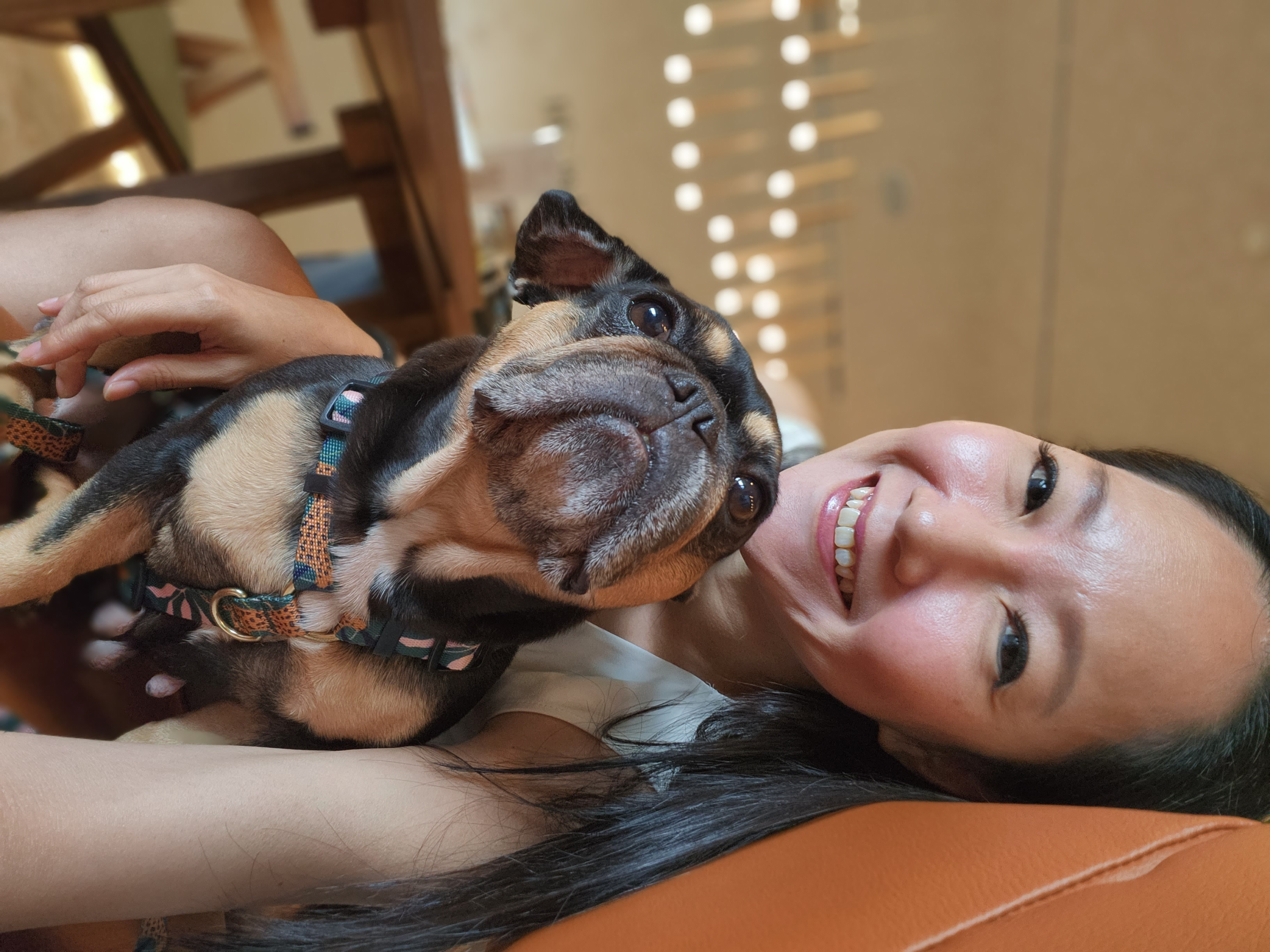
Both my dogs have been on phytoplankton regularly.
Wangcai had it as part of his daily routine.
BeanBean needs it especially when her pancreas flares up, because that's when her oxidative stress is very high. Besides phytoplankton, she's also on several medicinal mushrooms, including chaga and turkey tail.
Antioxidant-rich foods
Foods are easy to rotate, and if your pet doesn't like one, you can simply switch. Gently cook and purée vegetables to a baby-food consistency so your pet can absorb the nutrients, and choose organic whenever possible.
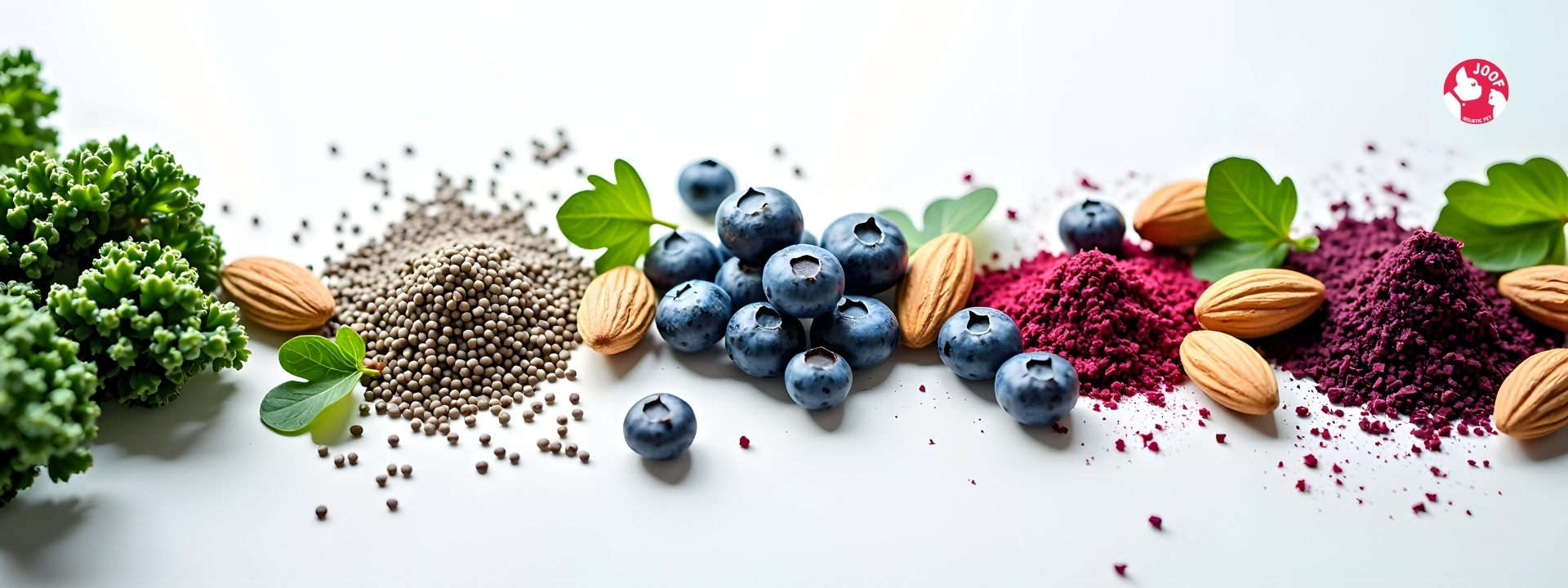
✓ Blueberries, strawberries, raspberries and cranberries
✓ Kale and spinach
✓ Beetroot. Read more in is beetroot good for pets?
✓ Bananas
✓ Red cabbage
✓ Sweet potatoes
✓ Apples (core and seeds removed)
✓ Pumpkin
✓ Broccoli
✓ Artichokes
✓ Eggshell membranes
✓ Watermelon and cantaloupe. Read more in can dogs eat watermelon?
For cats: most cats refuse fruit and vegetables, so supplements like phytoplankton and chaga are often the easier way to add antioxidants.
Another powerful antioxidant to know about is astaxanthin. Read more in astaxanthin for healthy ageing.
Frequently asked questions
Can I give antioxidants every day?
Yes. Adding antioxidants daily, whatever your pet's main diet, helps them build resilience over time.
Food or supplements, which is better?
Both work well together. Foods are easy to rotate, while supplements like phytoplankton and chaga give concentrated support.
Shop this article
This article is for educational purposes and isn't a substitute for veterinary care. If you're concerned about your pet's health, please seek professional advice.
ABOUT THE AUTHOR
Judyvein Cheng, CPCN, BRNC
Judyvein is a Certified Professional Canine Nutritionist and Certified Raw Nutrition Coach for Cats & Dogs, and the founder of JOOF Holistic Pet. Her journey began with her Frenchie, Wangcai, and today she helps pet parents in Singapore take a root-cause approach to their pets' health.
RELATED READING