.jpg?w=684&h=912)
By Judyvein Cheng, CPCN, BRNC
Certified pet nutritionist in Singapore
QUICK ANSWER
Spirulina is a blue-green algae and one of the most nutrient-dense foods on the planet. It's over 60% protein, rich in antioxidants and chlorophyll, and can support detox, allergies, gut health and immunity. A little goes a long way, so start small, and choose a clean, tested source.
What is spirulina?
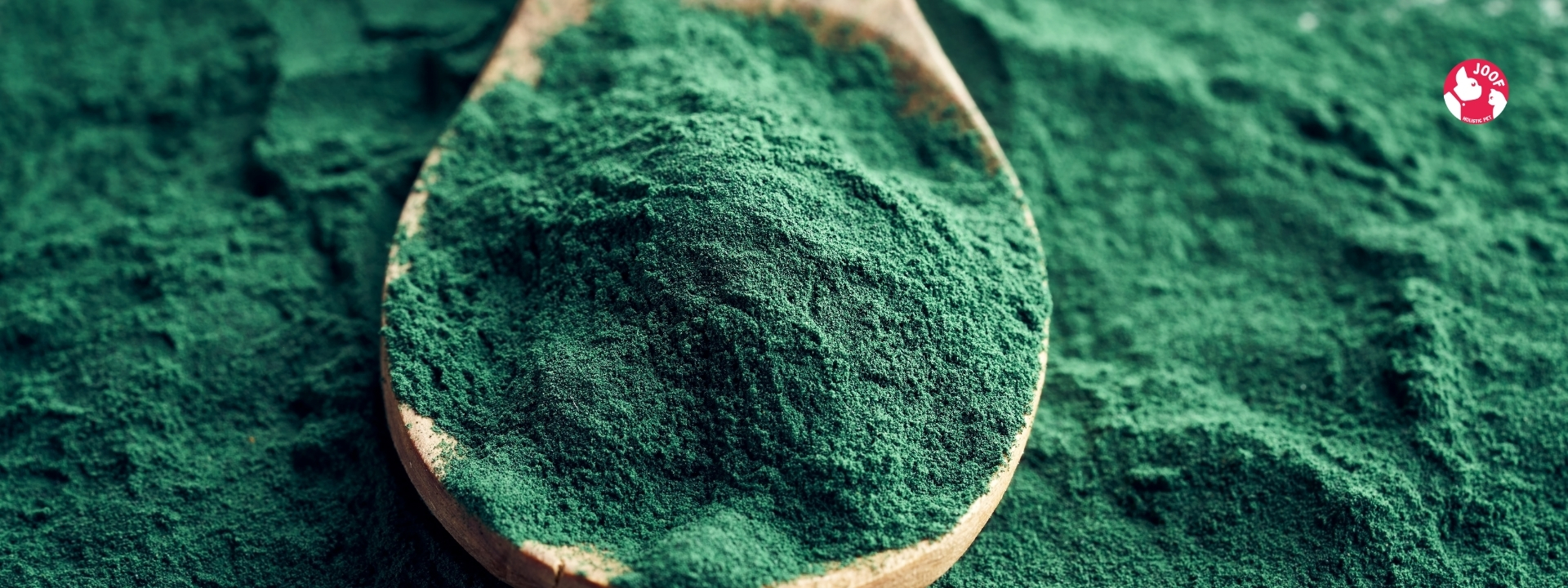
Spirulina is a microscopic, spiral-shaped blue-green algae with one of the highest concentrations of nutrients of any food, plant, grain or herb. It's over 60% protein, all easily digestible, and also provides beta-carotene, vitamins B1, B2 and B3, iron, trace minerals and gamma-linolenic acid (GLA), a rare essential fatty acid.
Its phytonutrients do even more. Phycocyanin, polysaccharides and sulfolipids support immunity and may lower the risk of infection, cancer and autoimmune disease. Carotenoid antioxidants support healthy cells. And chlorophyll helps the body clear out pollutants. Read more in the best antioxidants for dogs and cats.
The benefits of spirulina
Here's what the research suggests spirulina can do.
1. Detox and cleansing
Our dogs are exposed to toxins every day, from the air, water, food and medication. Spirulina's chlorophyll, phycocyanin and polysaccharides may help the body cleanse itself:
✓ A Japanese study found spirulina reduced kidney toxicity from mercury and three pharmaceutical drugs.
✓ In a rat study, spirulina or chlorella (another algae) helped eliminate about seven times more dioxin than a normal diet.
✓ In 1994, a Russian patent was granted for spirulina as a medical food for allergic reactions linked to radiation sickness.
✓ After Chernobyl, 270 children given 5g of spirulina a day for 45 days had their radionuclide levels drop by about 50%, and their allergic sensitivities returned to normal.
Read more in lowering your pet's toxic load.
2. Allergies
Clinical research suggests spirulina has broad anti-allergy effects. A 16-week human trial in 2008 showed it balanced the immune system and significantly reduced IL-6, an inflammatory marker. Test-tube, animal and human studies suggest it may also help protect against food allergies. Allergies are an inappropriate immune response, which is why two dogs can react so differently to the same trigger. Read more in coconut oil for seasonal allergies.
3. Gut health
Spirulina supports digestion and healthy bowel movements. It helps suppress E. coli and Candida while encouraging good bacteria like Lactobacillus and Bifidobacteria, which improves nutrient absorption and helps protect against infection.
4. Immunity
When the immune system is under stress, it drains energy and leaves your dog tired. Spirulina helps balance immunity, freeing up energy for healing and absorbing nutrients. Studies show it improves immune function, cell communication, DNA repair and new blood cell production. It supports bone marrow stem cells, macrophages, T-cells, natural killer cells, the spleen and the thymus. The animal feed industry is even studying spirulina as a probiotic to replace overused antibiotics.
5. Cancer
Spirulina's blue pigment, phycocyanin, has been shown to inhibit the growth of cancer colonies. Animal studies show anticancer activity and natural killer cell stimulation, and lab studies show its polysaccharides can help repair genetic material damaged by toxins or radiation. An Oregon State University study found fewer tumours in animals given chlorophyll before exposure to a strong carcinogen, and chlorophyll may help reduce the risk of skin, stomach, colon and liver cancers. Read more in when your pet has cancer.
How to give spirulina
Spirulina comes as a powder (the most common), capsules, juices, and as an ingredient in other natural products. According to herbalist Greg Tilford, it's safe to give daily, but because it's so nutrient-dense, too much can cause diarrhoea and tummy upset. Here's my suggested daily amount:
Small dogs (under 9kg / 20lb): ¼ teaspoon of spirulina powder a day.
Medium dogs (9–27kg / 20–60lb): ½ teaspoon a day.
Large dogs (over 27kg / 60lb): 1 teaspoon a day.
Cats: ⅛–¼ teaspoon a day, mixed into wet food. Start with a very small amount, as cats can be sensitive to new flavours.
Start with less and build up slowly.
Choose a clean source. Like all algae, spirulina can pick up heavy metals and toxins from the water it grows in. Choose organic spirulina from a brand that tests for contaminants, or a trusted supplement that includes it.
With regular spirulina, you can expect a shinier coat, fresher breath and better overall condition.
Supplements with spirulina: Four Leaf Rover Green Rover, Adored Beast Vital Defense and Four Leaf Rover Harmony all contain spirulina.

FROM MY EXPERIENCE
BeanBean has been on Four Leaf Rover Harmony before, which includes spirulina among its ingredients.
Frequently asked questions
Is spirulina the same as chlorella?
No. Both are algae, but they're different. Some of the detox research above was on chlorella too.
Can I give spirulina every day?
Yes, at the right amount. Start small, as too much can upset the stomach.
Shop this article
This article is for educational purposes and isn't a substitute for veterinary care. If you're concerned about your pet's health, please seek professional advice.
ABOUT THE AUTHOR
Judyvein Cheng, CPCN, BRNC
Judyvein is a Certified Professional Canine Nutritionist and Certified Raw Nutrition Coach for Cats & Dogs, and the founder of JOOF Holistic Pet. Her journey began with her Frenchie, Wangcai, and today she helps pet parents in Singapore take a root-cause approach to their pets' health.
RELATED READING