.jpg?w=684&h=912)
By Judyvein Cheng, CPCN, BRNC
Certified pet nutritionist in Singapore
QUICK ANSWER
Coconut oil is one of the most versatile things you can keep in your pet cupboard. You can feed it, brush with it, and use it on skin, ears, paws and fur. Here are the eleven ways I use it most.
1. Mix it into meals
The easiest way to start. Stir coconut oil into your pet's food, whether that's fresh, raw, cooked or kibble. It supports skin, coat, digestion and energy from the inside out.
Recommended amount: 1 teaspoon per 4.5kg (10lb) of body weight daily.
Start slowly: begin with about ¼ of that and build up over 2 weeks. For sensitive pets, start with just 2–3 drops.
2. Brush their teeth
Coconut oil makes a natural, safe-to-swallow toothpaste that most pets love. For extra support, mix in a pre- and probiotic like Adored Beast Love Bugs. See my full guide on coconut oil for dogs' teeth.
3. Soothe dry noses and cracked paws
Rub a small amount into a dry nose or rough paw pads. It's safe if licked, so there's no need to worry when your dog cleans it off. Apply after walks, especially after hot pavements.
4. Condition skin and coat
For dry or flaky patches, massage a thin layer into the skin. For an all-over coat treatment, rub a small amount between your palms and run it through the coat, then brush. Avoid applying to raw, bleeding or infected skin.
5. Give a skin-soothing spa mask
For pets with skin conditions, a coconut oil mask can soothe and nourish the skin. Use coconut oil on its own, or mix it with Adored Beast Gut Soothe, or with Gut Soothe and plain yoghurt.
Apply it over the affected skin and leave it on for about 15 minutes, or as long as your pet is happy to stay put. Then wash it off with a shampoo made for skin issues, such as 4Legger's cooling shampoo. If you use yoghurt, choose plain, unsweetened yoghurt, never anything flavoured or containing xylitol.

FROM MY EXPERIENCE
This was Wangcai's little spa session. Depending on his skin, I'd use coconut oil alone, coconut oil with Gut Soothe, or all three together. Fifteen minutes was as long as he'd stay in the tub, and then I'd shampoo him with 4Legger's cooling shampoo.
At first we did it 2–3 times a week. As his skin got better, we cut down to once a month, and eventually only when he needed it.
6. Clean and soothe the ears
Coconut oil is a gentle, natural ear cleaner. Here's how I did it for Wangcai, 2–3 times a day during an ear infection:
Clean first: wipe the ear with JOOF Hygiene Water, as deep as your finger can comfortably reach. Never use cotton buds inside the ear.
Then apply coconut oil, either way: put a few drops into the ear canal and gently massage the base of the ear, or soak a cotton pad in coconut oil and wipe the whole ear, letting the oil slowly flow into the canal.
Let your dog shake. The debris comes out with the shake, so wipe it away afterwards.
If the ear is very painful, bleeding, or has a lot of discharge, get it checked before putting anything into the canal, in case the eardrum is damaged.
7. Lift tear stains and fur stains
Clean first: wipe the stained area with JOOF Hygiene Water.
Then use coconut oil: put a little coconut oil on a cotton pad and wipe the stained area repeatedly. You'll see the stain start to lift onto the pad.
Repeat regularly. Stubborn stains fade gradually over time.
This works for other stains on white or light-coloured fur too, such as around the mouth or paws. Wipe gently and keep the oil out of the eye itself. Heavy or sudden tear staining can also point to something underneath, like diet or blocked tear ducts, so it's worth looking at the cause as well as the stain.
8. Protect against fleas and ticks
Coconut oil is a natural option for fleas and ticks, though it does leave your pet oily.
✓ For an infestation: soak your pet's coat with coconut oil and leave it on as long as you can. It kills the fleas on your pet.
✓ If you suspect fleas: apply coconut oil all over the body and leave it on as long as possible.
✓ Before walks: a light coat of coconut oil makes it hard for ticks to grab on.
Coconut oil kills the fleas on your pet, but not the eggs and larvae around your home. Wash your pet's bedding and vacuum often to stop them coming back.
9. Support digestion
Coconut oil gently lubricates the gut and helps soften stools. Paired with moisture and the right fibre, it's a helpful part of managing constipation. Unsweetened coconut chips add gentle fibre too.
10. Make cooling treats
Perfect for Singapore's heat. Mix coconut oil with plain pumpkin, bone broth or blended berries, pour into a silicone mould and freeze. Count these treats as part of your pet's daily coconut oil amount.
11. Hide supplements and pills
A small dab of coconut oil helps powders mix in smoothly and makes pills slide down more easily.
Storing coconut oil
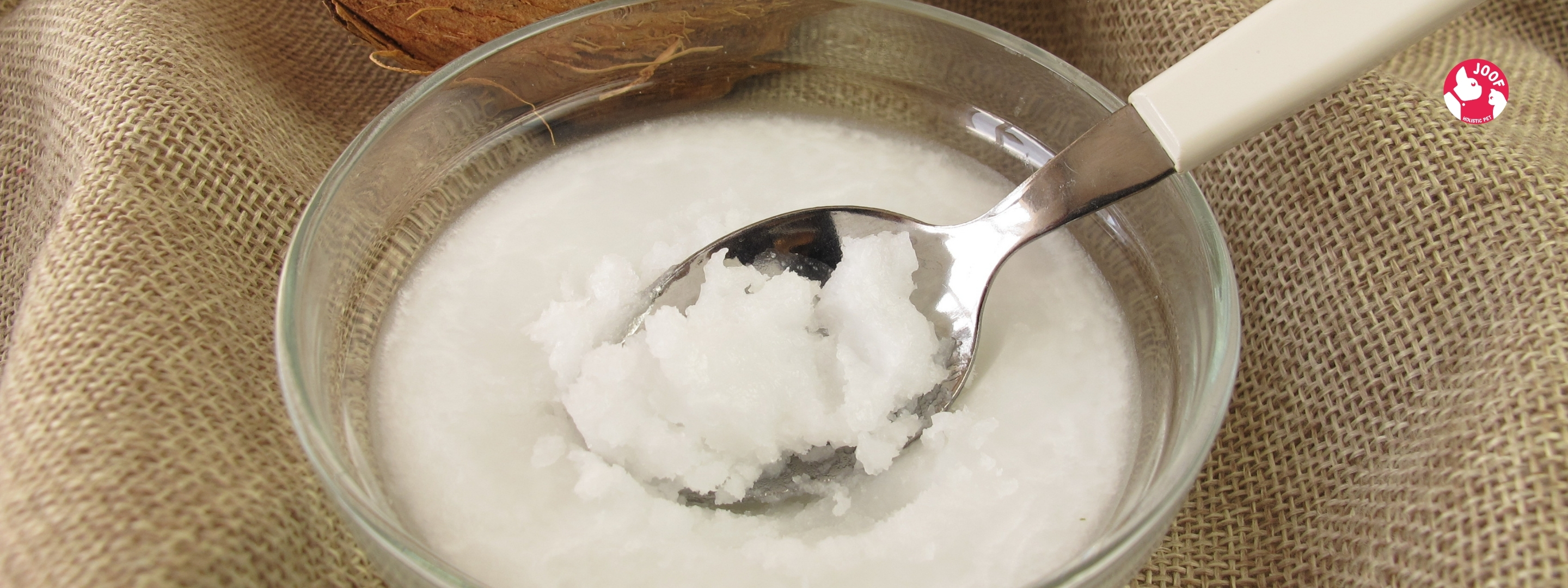
Coconut oil is solid below about 24°C and liquid above it, so in Singapore it's usually liquid at room temperature. Both are completely normal and don't affect quality. Keep it tightly closed, away from heat and light. Thanks to its stable structure, it resists going rancid far better than most oils.
Tip: if you prefer it solid for brushing or paw balm, keep a small jar in the fridge.
Frequently asked questions
Which coconut oil should I use?
Choose an organic, cold-pressed virgin coconut oil that's also therapeutic grade. Refined coconut oil loses many of its beneficial compounds, and not every organic, cold-pressed virgin coconut oil is therapeutic grade. I recommend CocoTherapy Organic Virgin Coconut Oil, which is therapeutic grade.
Can I use coconut oil both inside and out at the same time?
Yes. Just remember that what your pet licks off counts towards their daily amount.
Can cats have coconut oil?
Yes, in small amounts, introduced slowly. Start with just a few drops.
Shop this article
This article is for educational purposes and isn't a substitute for veterinary care. If you're concerned about your pet's health, please seek professional advice.
ABOUT THE AUTHOR
Judyvein Cheng, CPCN, BRNC
Judyvein is a Certified Professional Canine Nutritionist and Certified Raw Nutrition Coach for Cats & Dogs, and the founder of JOOF Holistic Pet. Her journey began with her Frenchie, Wangcai, and today she helps pet parents in Singapore take a root-cause approach to their pets' health.
RELATED READING
-Main.jpg?w=1920&h=720)