.jpg?w=684&h=912)
By Judyvein Cheng, CPCN, BRNC
Certified pet nutritionist in Singapore
QUICK ANSWER
Yes. Virgin coconut oil can be a powerful natural support for ringworm in dogs and cats. Its lauric acid has antifungal properties, and it soothes the dry, itchy skin ringworm leaves behind. Milder cases may clear with coconut oil and good hygiene alone, while more serious cases need more layers of support. Whether it works alongside or in place of medication depends on your pet's condition and your own decision as their caregiver.

FROM MY EXPERIENCE
I've seen it work first-hand. When my Frenchie, Wangcai, had ringworm, coconut oil cleared it within 3 weeks, with no medication needed for his condition. But ringworm can be stubborn. I caught it from him myself, the spores spread back into our home, and Wangcai was reinfected. We cleared it again within 2 weeks, and that second round taught me how important cleaning the whole house is.
What ringworm actually is
Despite the name, ringworm has nothing to do with worms. It's a fungal skin infection (dermatophytosis) that feeds on the outer layer of skin, hair and nails.
In dogs and cats, it usually shows up as:
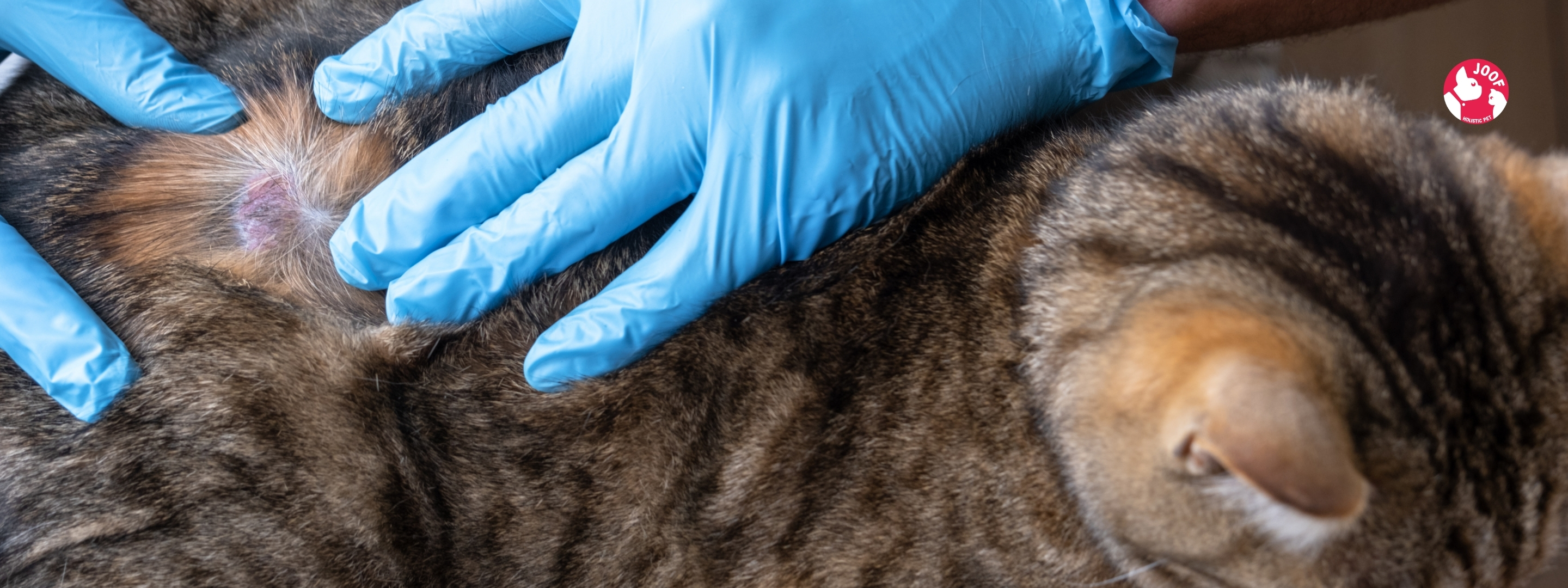
- round, patchy hair loss that looks just like a ring, often on the face, ears, paws or tail
- scaly, crusty or flaky skin
- broken hairs around the patch
- mild itching, though some pets don't itch at all
Cats, especially kittens and long-haired breeds, can carry ringworm with very few visible signs.
Singapore's heat and humidity make fungal skin issues more common here, so it's worth knowing what to look for.
Is ringworm contagious to humans?
Yes, as I learnt first-hand. Ringworm spreads between pets, and from pets to people, through direct contact and shed hair. While your pet is recovering:
- wash your hands after handling them
- keep them off beds and sofas
- watch yourself, children and other pets for red, ring-shaped patches
How coconut oil helps ringworm
Fights fungi naturally
Virgin coconut oil is rich in lauric acid, which studies show has antifungal activity. In one study, it performed comparably to a 1% clotrimazole antifungal cream for tinea, the same fungal family that causes ringworm.
Soothes and protects the skin
It calms redness and itching, keeps lesions from drying and cracking, and supports the skin barrier while it heals.
Safe if licked
Pets lick whatever you put on their skin, and pure virgin coconut oil is safe for that, unlike many creams.
Supports immunity from within
The medium-chain fatty acids in coconut oil help the body resist infection when added to meals.
The more serious the infection, the more support your pet needs: consistent topical care, a clean home, good nutrition, and for some pets, veterinary treatment as well.
How to use coconut oil on ringworm
Clean and disinfect the area first. Spray or wipe the patches with JOOF Hygiene Water. It's a pet-safe HOCl solution that is naturally antifungal and safe if licked. Let it air dry completely, since fungi thrive in moisture.
Apply a thin layer of organic virgin coconut oil to each patch with a cotton bud. Using a fresh bud each time keeps your hands off the affected area and avoids spreading spores.
Repeat 2–3 times a day, cleaning with Hygiene Water before each application.
Wash your hands afterwards, as good practice.
Keep going until the patches have fully cleared and the hair grows back.
Add coconut oil to meals
Feeding coconut oil supports your pet's immunity from the inside while you treat the skin.
Recommended amount: 1 teaspoon per 4.5kg (10lb) of body weight daily.
First time feeding coconut oil? Start with about ¼ of that amount and build up gradually over 2 weeks. This helps avoid loose stools while your pet adjusts.
Clean the entire house, every day
This is the step most pet parents underestimate. Ringworm spores shed from your pet's skin and hair and can survive in your home for months. Cleaning only your pet's bed and toys isn't enough. Spores settle everywhere your pet goes, and on the people who handle them.
✓ Clean the whole house, daily if you can, for as long as your pet is recovering, not just their bed and favourite spots.
✓ Spray surfaces with JOOF Hygiene Water: floors, sofas, crates, collars, grooming tools, and anywhere your pet rests.
✓ Soak bedding, blankets, clothing and soft toys in Hygiene Water before washing. You'll just need a larger volume to fully soak them.
✓ Vacuum often, and empty or clean the vacuum afterwards.
✓ Check yourself and your family too. Humans can catch ringworm and carry it back into the environment, which is exactly how reinfection happens.
Support your pet's whole recovery
Pets with weaker immunity are more prone to ringworm and slower to clear it. A fresh, species-appropriate diet supports skin and immune health. If skin issues keep coming back, that often points to an underlying gut, diet or immune issue worth looking into.
Good to know: it's worth getting a diagnosis to confirm it is ringworm, since yeast, mange and allergies can look similar.
Frequently asked questions
Can I use any coconut oil?
Choose an organic, cold-pressed virgin coconut oil that's also therapeutic grade. Refined coconut oil loses many of its beneficial compounds during processing, and not every organic, cold-pressed virgin coconut oil is therapeutic grade. The one I recommend is CocoTherapy Organic Virgin Coconut Oil. It's made from organic coconuts grown on their own family farm and cold-pressed into a therapeutic-grade oil that's naturally rich in lauric acid, the compound behind coconut oil's antifungal benefits.
Is coconut oil safe for cats with ringworm?
Yes. Pure virgin coconut oil is safe if licked, which matters for cats who groom constantly.
How long does ringworm take to clear?
Ringworm can be stubborn. With consistent care, many pets clear within 2–4 weeks, but it often comes back if spores are left in the home or passed between family members. Treating your pet, everyone in the household who's affected, and the entire house at the same time is the best way to clear it for good.
My pet keeps getting skin infections. What should I do?
Repeated fungal or yeast issues are often a sign that something deeper needs attention. Our PawConsult looks at the root cause, from diet to gut health.
Shop this article
This article is for educational purposes and isn't a substitute for veterinary care. If you're concerned about your pet's health, please seek professional advice.
ABOUT THE AUTHOR
Judyvein Cheng, CPCN, BRNC
Judyvein is a Certified Professional Canine Nutritionist and Certified Raw Nutrition Coach for Cats & Dogs, and the founder of JOOF Holistic Pet. Her journey began with her Frenchie, Wangcai, and today she helps pet parents in Singapore take a root-cause approach to their pets' health.
RELATED READING