.jpg?w=684&h=912)
By Judyvein Cheng, CPCN, BRNC
Certified pet nutritionist in Singapore
QUICK ANSWER
Cats are obligate carnivores, so they don't need vegetables, but most can enjoy a little. Small amounts of finely puréed vegetables add fibre, vitamins, minerals and protective plant compounds. Start tiny, offer one vegetable at a time, and never force it.
Dogs are often encouraged to eat fruit and vegetables, and plant foods can benefit them. Dogs are facultative carnivores: meat is their main food, but they can also make use of some plant foods. Cats are different. They're obligate carnivores, which means they need only meat to survive. But whether they need vegetables and whether they can eat them are two different questions.
Can cats eat vegetables?
Yes. Adding a little vegetable to your cat's bowl regularly is fine, and many of the reasons we eat vegetables apply to cats too. Vegetables provide whole-food fibre, vitamins, minerals and phytochemicals such as polyphenols, flavonoids and carotenoids. These plant compounds can help:
✓ Support the immune system
✓ Protect against free radical damage. Read more in the best antioxidants for dogs and cats
✓ Reduce inflammation
✓ Protect heart health
✓ Improve gut health. Read more in why pets need fibre
✓ Slow the growth of some cancer cells
✓ Help regulate hormones
✓ Protect eye health
✓ Support skin and bone health
How to feed vegetables to your cat
Some cats happily eat vegetables and even have favourites. Others refuse them, and a fussy cat may reject the whole meal if it doesn't smell right. The golden rule: never force it.
Start slow. Mix a tiny amount into a small portion of food, so your cat can refuse it without losing a whole meal.
Introduce one vegetable at a time. Like us, cats may like some vegetables and not others.
Go small. Whole pieces, like chopped carrot, rarely work. Purée vegetables finely, which also makes them easier to digest. Fermented vegetables are easy to digest too, if your cat accepts them.
Lightly steam, then purée. This is how most cats enjoy them. Choose organic whenever possible.
If your cat refuses all vegetables, that's OK. In the wild, cats get some plant matter from their prey's stomach contents. A healthy raw diet with a small percentage of vegetables is a good goal, but not a must.
Grow some catnip or cat grass. If your cat doesn't like vegetables, they may enjoy chewing on fresh catnip.
Vegetables cats may enjoy
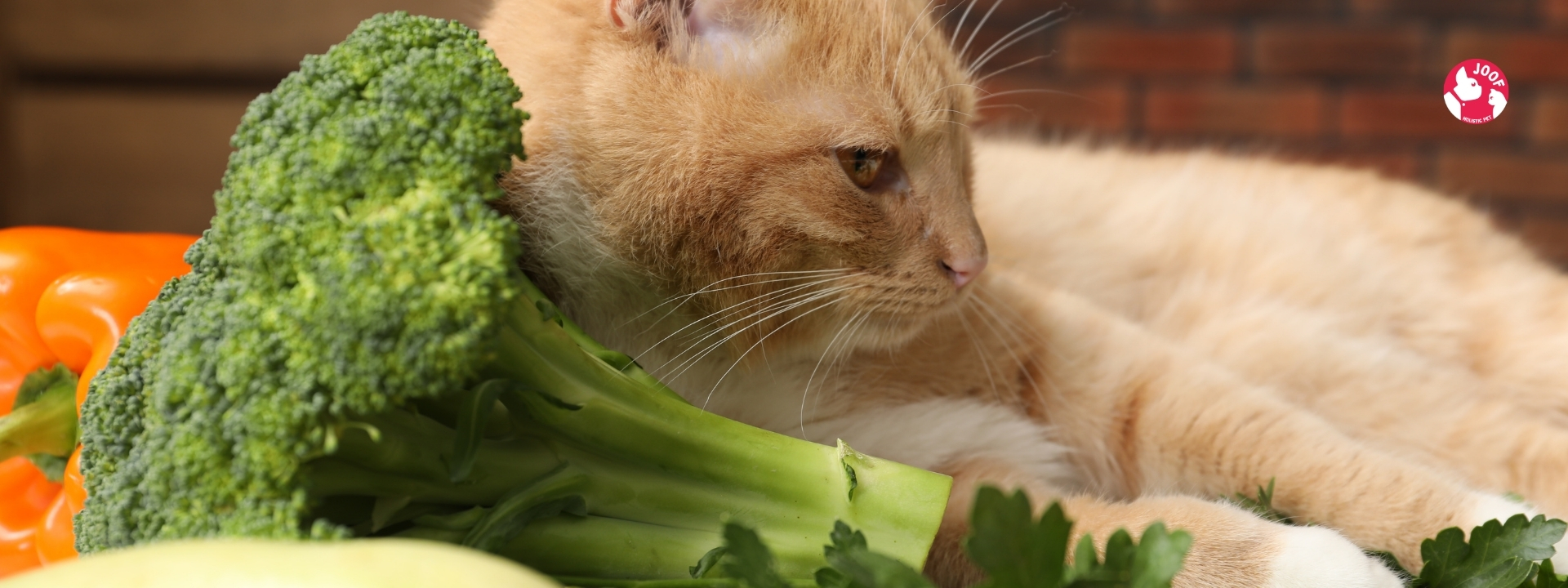
✓ Broccoli
✓ Brussels sprouts
✓ Zucchini
✓ Asparagus
✓ Pumpkin
✓ Green beans
✓ Leafy greens
Keep it plain: no seasoning, oil or sauces. That leftover teriyaki stir-fry is for your lunch, not your cat's. And never feed onions, garlic, leeks or chives, which are toxic to cats.
Frequently asked questions
How much vegetable should a cat have?
Only a small amount. Vegetables should be a small percentage of a cat's diet, with meat as the main food.
My cat refuses all vegetables. Is that a problem?
No. Cats don't need vegetables. You can support their gut in other ways, such as with a cat-specific probiotic like Felix's Flora. Read more in probiotics for cats.
Shop this article
This article is for educational purposes and isn't a substitute for veterinary care. If you're concerned about your pet's health, please seek professional advice.
ABOUT THE AUTHOR
Judyvein Cheng, CPCN, BRNC
Judyvein is a Certified Professional Canine Nutritionist and Certified Raw Nutrition Coach for Cats & Dogs, and the founder of JOOF Holistic Pet. Her journey began with her Frenchie, Wangcai, and today she helps pet parents in Singapore take a root-cause approach to their pets' health.
RELATED READING