.jpg?w=684&h=912)
By Judyvein Cheng, CPCN, BRNC
Certified pet nutritionist in Singapore
QUICK ANSWER
Older dogs need mental exercise as much as physical exercise, often even more. As their bodies slow down, brain games keep them engaged, confident and happy, and help keep their minds sharp for longer.
Why mental stimulation matters
A busy brain is a happier one. Regular brain games help prevent boredom, anxiety and restlessness, and they build confidence as your dog's body slows down. A short brain game can also tire a dog out as much as a walk, which is especially useful on hot Singapore days, or for dogs with sore joints.
1. Sniffing games
Sniffing is one of the most natural, relaxing things a dog can do. Hide treats around a room, or scatter them in a snuffle mat, and let your dog search them out.
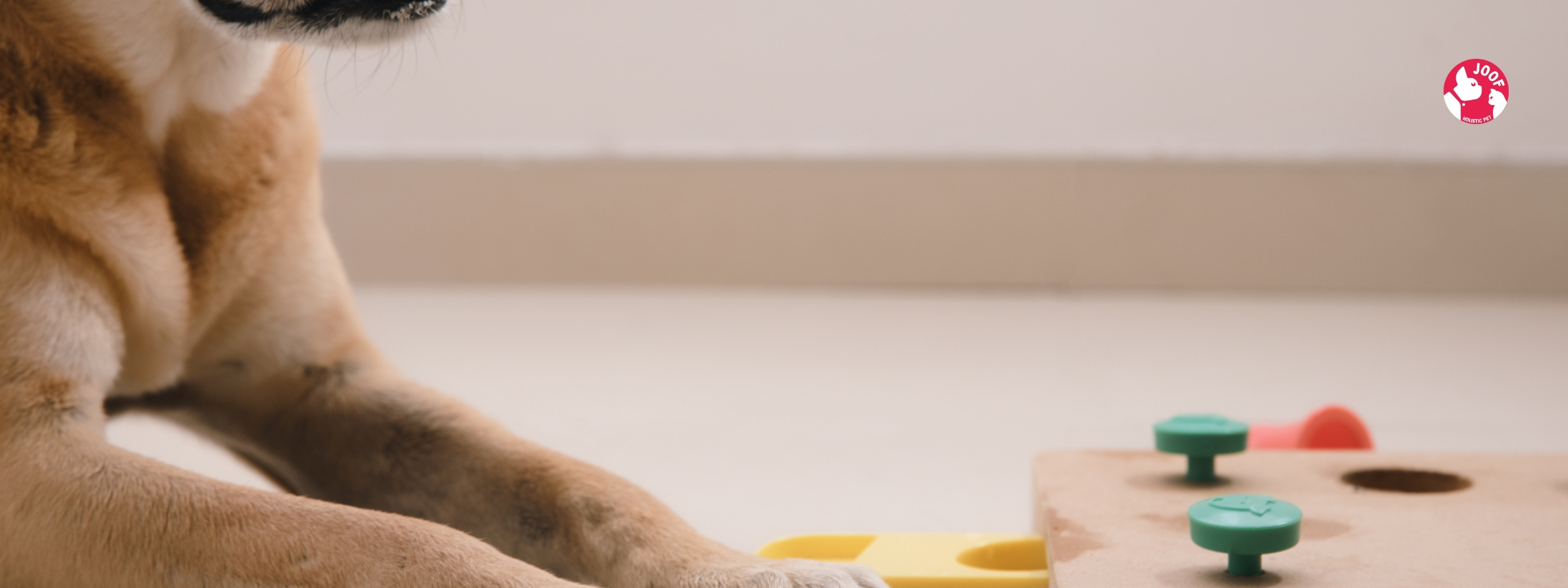
2. Puzzle feeders
Slow feeders and treat puzzles turn mealtime into a brain game. Start with easy ones so your dog stays confident rather than frustrated.
3. Gentle training
Old dogs really can learn new tricks. Teach something new, or refresh an old favourite. Keep sessions short, and reward generously.
4. New places, slow walks
Try a "sniffari": a slow walk somewhere new, where your dog sets the pace and stops to sniff everything. New smells give the brain a wonderful workout.
5. Quality time
Gentle massage, brushing and calm play keep your dog connected, relaxed and engaged with you.
Feed the brain too
Brain health starts with nutrition. Coconut oil's medium-chain fatty acids give the ageing brain an extra fuel source. Read more in my guides on coconut oil and brain health and your pet's ageing brain.
Signs to watch for
Confusion, getting stuck in corners, restlessness at night, or forgetting familiar routines can be signs of cognitive decline. Brain support works best when it starts early, before you see these signs.
Frequently asked questions
How long should brain games be?
Short sessions of 5–10 minutes, a few times a day, work best for senior dogs.
What if my dog has joint pain?
Choose low-impact games like sniffing and puzzle feeders. See my guide on natural arthritis support.
Shop this article
This article is for educational purposes and isn't a substitute for veterinary care. If you're concerned about your pet's health, please seek professional advice.
ABOUT THE AUTHOR
Judyvein Cheng, CPCN, BRNC
Judyvein is a Certified Professional Canine Nutritionist and Certified Raw Nutrition Coach for Cats & Dogs, and the founder of JOOF Holistic Pet. Her journey began with her Frenchie, Wangcai, and today she helps pet parents in Singapore take a root-cause approach to their pets' health.
RELATED READING
-Main.jpg?w=1920&h=720)