
By Judyvein Cheng, CPCN, BRNC
Certified pet nutritionist in Singapore
QUICK ANSWER
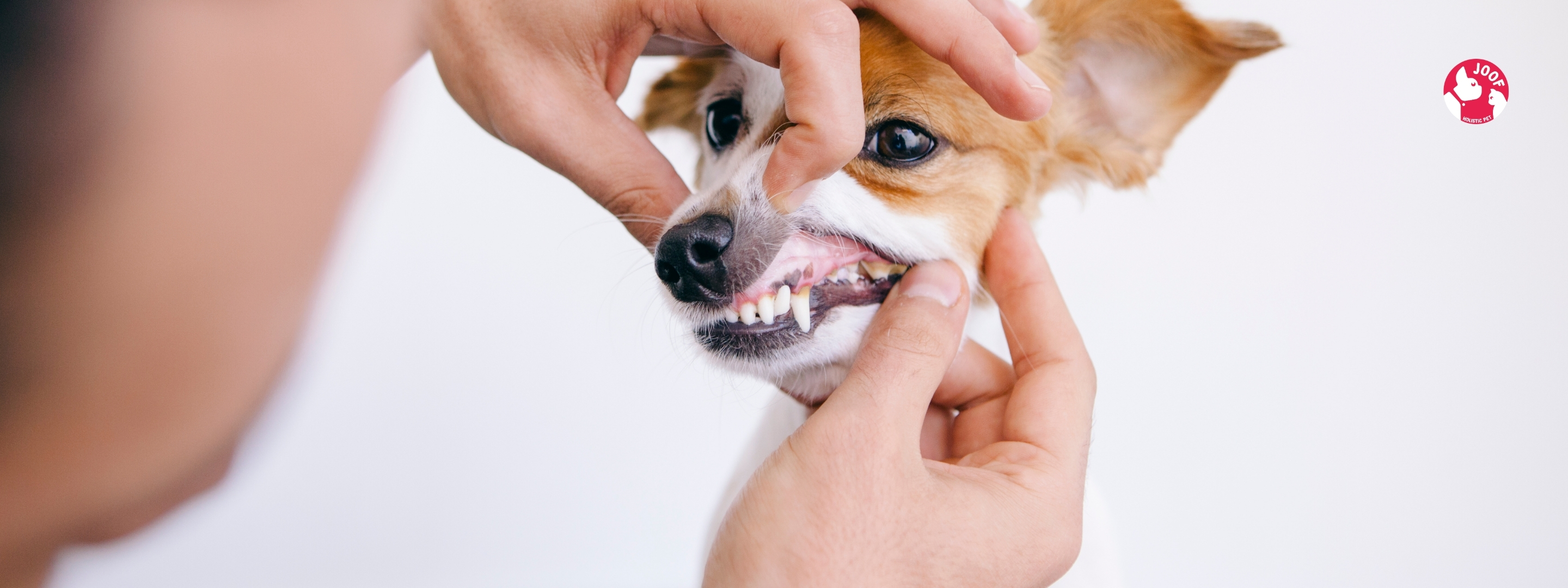
Roughly 85% of dogs over the age of 4 have periodontal disease, caused by plaque and tartar building up on their teeth. It doesn't just cause bad breath. It can inflame the gums, loosen teeth, and in severe cases, bacteria can enter the bloodstream and affect the heart, liver and kidneys. A simple daily routine makes a big difference.
Signs to watch for
Bad breath, yellow or brown teeth, red or bleeding gums, drooling, chewing on one side, or dropping food.
5 ways to keep teeth clean
Feed fresh food. Fresh, species-appropriate food leaves less starchy residue on the teeth for bacteria to feed on, and raw meat, fruit and vegetables help scrub away plaque.
Brush with a natural toothpaste. Coconut oil's lauric acid is naturally antibacterial, it's safe to swallow, and most dogs love the taste. You can mix in a little peppermint oil to freshen breath, or probiotics. Dr Judy Morgan's dental drops already contain peppermint oil and are made for both dogs and cats. Put a little on a piece of gauze wrapped around your finger and gently brush the teeth and gums. More in coconut oil for dogs' teeth.
Clean after meals. Wipe teeth and gums with JOOF Hygiene Water after meals and snacks.
Give safe chews. Chewing scrapes away plaque and boosts blood flow to the gums. Raw meaty bones (never cooked bones) are nature's toothbrush, and bully sticks are a long-lasting, protein-rich chew. Always supervise.
Support the mouth's good bacteria. Adored Beast Love Bugs helps balance oral bacteria. TEEF for Life in the water bowl and Animal Essentials Healthy Gum support the gums.
Plaque keeps coming back fast? That can be a sign of a mineral imbalance. An HTMA test can help you find out what's going on.
Already have hard tartar? Brushing won't remove it. If your dog has heavy tartar, loose teeth or a painful mouth, see your vet first, then use this routine to keep things healthy afterwards.
Using peppermint or other essential oils? Used in the right amount and dilution, they can be safe, as in Dr Judy Morgan's dental drops for dogs and cats. Always check the product properly, including who formulated and manufactured it.

FROM MY EXPERIENCE
This is the routine that helped BeanBean go from grade 3 to grade 2 periodontal disease. Read her full story in coconut oil for dogs' teeth.
Frequently asked questions
How often should I brush?
Daily is ideal. Even a few times a week helps.
Are dental chews enough on their own?
No. They help, but they don't replace brushing.
Does this work for cats?
Yes, with smaller amounts and a gentler approach. Choose products made for cats, like Dr Judy Morgan's dental drops.
Shop this article
This article is for educational purposes and isn't a substitute for veterinary care. If you're concerned about your pet's health, please seek professional advice.
ABOUT THE AUTHOR
Judyvein Cheng, CPCN, BRNC
Judyvein is a Certified Professional Canine Nutritionist and Certified Raw Nutrition Coach for Cats & Dogs, and the founder of JOOF Holistic Pet. Her journey began with her Frenchie, Wangcai, and today she helps pet parents in Singapore take a root-cause approach to their pets' health.
RELATED READING